

Petro's Project ERL Superdeck 427 w/ Whipple 2.9L
 Jun 10, 2017 | 02:21 PM
#361


Take a look at Roller X lifters ...they got rid of the axle the needle bearings / bushings ride on to have even less friction as a roller lifter. The roller only rides on a thin boundary layer of oil (fluid friction) inside the lifter.
Come on I only went to college for like a semester and had to take Math 095. I dunno how to figure all the letters into numbers hell I can barely read a micrometer.
A quick Google gave me tons of hits but here's one
http://www.school-for-champions.com/...m#.WTxEhrU8KEc
And another on reducing fluid friction
http://www.school-for-champions.com/...m#.WTxIAbU8KEd
Come on I only went to college for like a semester and had to take Math 095. I dunno how to figure all the letters into numbers hell I can barely read a micrometer.
A quick Google gave me tons of hits but here's one
http://www.school-for-champions.com/...m#.WTxEhrU8KEc
And another on reducing fluid friction
http://www.school-for-champions.com/...m#.WTxIAbU8KEd
Last edited by Petraszewsky; Jun 10, 2017 at 02:29 PM.
Jun 10, 2017 | 02:29 PM
#362


Joined: Jan 2006
Posts: 16,282
Likes: 438
From: Huntsville, AL
Pretty sure we are talking about different things here 
My only concern with you coating everything is if the roller stops rolling like its supposed to and starts sliding across the cam lobe. So basically you are wearing on one spot of the roller as opposed to the whole thing.
My only concern with you coating everything is if the roller stops rolling like its supposed to and starts sliding across the cam lobe. So basically you are wearing on one spot of the roller as opposed to the whole thing.
Jun 10, 2017 | 02:30 PM
#363
How are we talking about two different things? Rolling always beats sliding
Again if the surface is too slippery for the roller to roll (less friction) then it would be too slippery for the roller to slide (more friction). Even with fluid friction the roller is less than sliding friction with oil. One could say the roller must plow through the oil but so does sliding friction. Sliding friction plows through the oil its entire jagged surface whereas a roller plows through on a single load point.
Again if the surface is too slippery for the roller to roll (less friction) then it would be too slippery for the roller to slide (more friction). Even with fluid friction the roller is less than sliding friction with oil. One could say the roller must plow through the oil but so does sliding friction. Sliding friction plows through the oil its entire jagged surface whereas a roller plows through on a single load point.
Jun 11, 2017 | 03:38 PM
#364
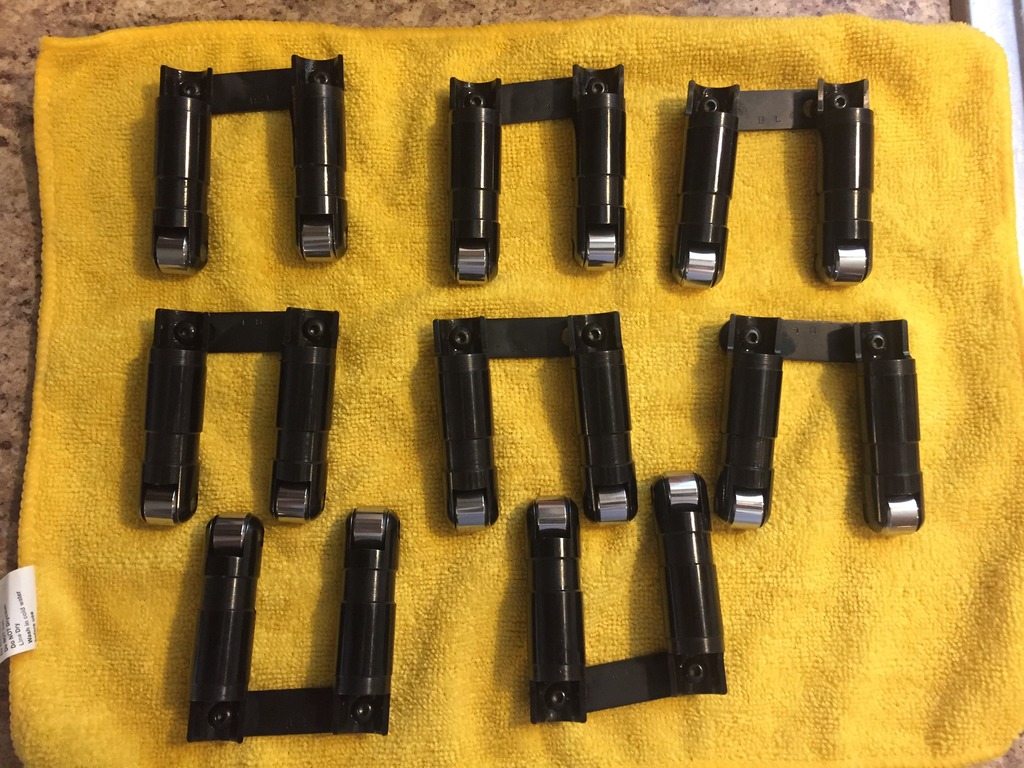
I flushed all of the oil out of the needle bearings in the rollers on the lifters then ran the roller dry at slightly elevated RPMs of what they will see inside the engine. This was to burnish the needle bearings into the roller. I cleaned them again and then oiled the bearings. After I let the oil soak in for about 10minutes I ran then rollers at the same elevated RPMs as before. Great results!!! You can almost breathe on them and make them spin!
 Jun 11, 2017 | 05:34 PM
#365
Joined: Jan 2006
Posts: 16,282
Likes: 438
From: Huntsville, AL
What wouldve been really interesting is to run it like most sane people do and get some dyno time, then pull it apart and do all this stuff and re-dyno to see if it made any difference.
 Jun 12, 2017 | 10:58 AM
#368
Wrote this to explain to some that don't believe in Dry film lubricants (or thermal coatings) and worry about them damaging a engine or component. I know the internet is full of people that think these coatings come off and damage your engine or are worthless time and money investments. Well the internet is full of people stuck thinking that you need a certain amount of roughness to retain oil on metal surfaces. That is way way old technology used by racers back in the day. They wanted a certain amount of roughness because bare metal repels oil whereas Dry film retains it. Smoother is better in every way and dry film moly coatings improve the surface down at the microscopic level all while retaining oil better (due to asperities not being able to wipe the surface). Dry film lubricants are widely used in OEM and aftermarkets engines and their parts. Bearings, piston skirts, camshafts and the list goes on and on. Have you ever heard of a engine failure because the dry film lubricant delaminated from the surface? Not once....The dry film moly is softer than the metal substrate unlike a particle of dirt or other metal which means it won't score the metal and it actually prevents galling/spalling of metal parts. A particle of dirt or metal as small as 5 microns in size (a human hair is roughly 70microns and pollenis 10 microns) on the other hand is as hard or harder than metal surfaces. The 5 micron piece of dirt or metal dust can ruin your engine! A molecule, shavings/dust, or at worst a sheet of moly that has delaminated from its surface will simply form into the metal at the mircoscopic level if it gets between bearing surfaces. That's why they coat engine bearings with it! You don't want the bearing to be harder than part riding on it! Moly also keeps microscopic asperities (small jagged peaks) in the metal surface from being able to "grab" one another and rip/tear each other off which creates debris that in turn catches and creates more asperities. The slippery moly binds to and stacks up on the asperity which doesn't allow an opposing asperity to grab onto it. Moly works in dry form and with a oil boundary layer. With a oil boundary layer moly prevents asperities from wiping the oil film off which is what you want. Of course the metal substrate needs to be as smooth as possible prior to coating because the moly is not a fix but rather a force multiplier. Moly may burnish to where it nots visible anymore but the moly platelets are still there at the mircoscopic level putting in work.
Last edited by Petraszewsky; Jun 12, 2017 at 11:10 AM.
Jun 13, 2017 | 12:07 PM
#369
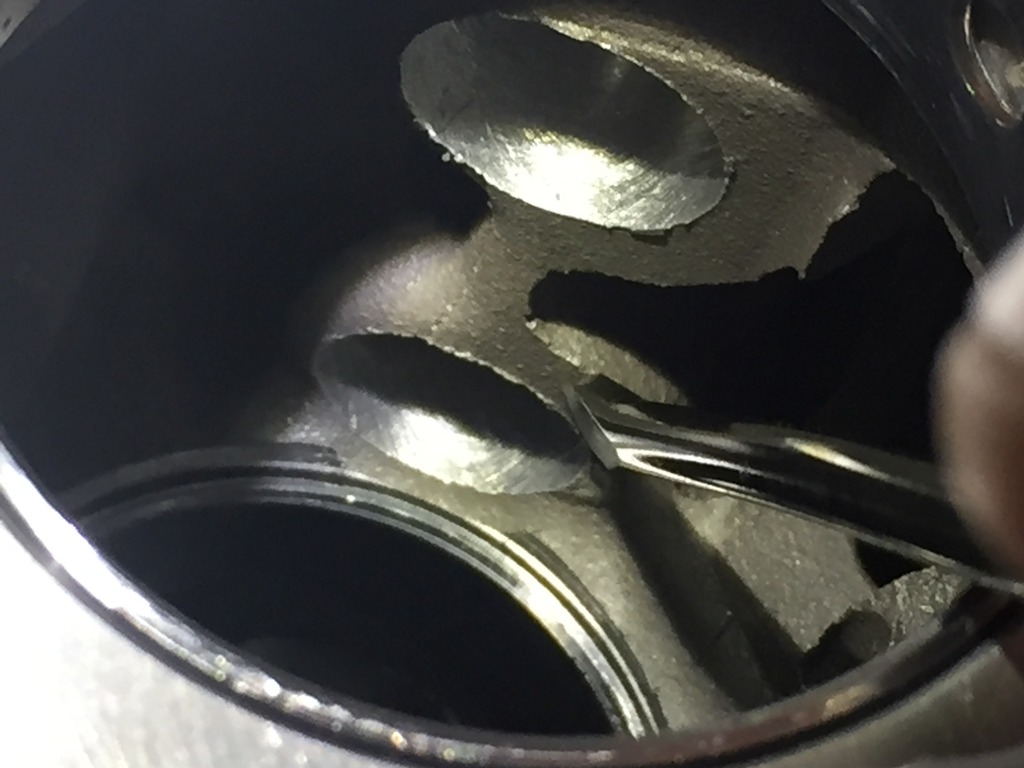
Disappointed in ERL to find these burrs left on the bottom edges of the lifter bores. Touching them with my finger was enough to make them come off. Will be getting a Flex hone for the bores to remove them when I disassemble the shortblock.