


Planned build ideas

 Mar 25, 2022 | 02:13 PM
#12

Thread Starter
Launching!


Joined: Mar 2016
Posts: 201
Likes: 12
From: Cumberland Plateau

If you're going to add a limited slip (I'd recommend the Eaton Detroit TrueTrac - love it!) with the 4.8L go ahead and upgrade to 3.42s or even 3.73s while in there (wish I had). On the highway you might lose an mpg, but sometimes you can gain in city traffic because you don't have to spend as much time in enrichment mode to accelerate (engine doesn't have to work as hard to get the truck moving). Plus if towing, the steeper gear can mean less down shifting, also sometimes saving fuel when hauling.
Info. in case you decide to do the other stuff down the road:
For the headers, back pressure is a myth but exhaust velocity is not. That being said, I'd still go with the 1 7/8 headers to let it take advantage of the blower.
The Comp189-400-13 (XR263PIHR14) is there VVT compatible cam (so hopefully yours has that) to be used with their cam phase limiter. It's ground on a 105 intake centerline, so the 0.050" IVC is only 30* (assuming their phase limiter keeps the park position @ 0* advance - anyone confirm?) which would be fine for a small 4.8L in a truck. Should work well as a PDS cam in a 4.8L with cathedral port heads. You'll want a tuner who is experienced with VVT and access to a chassis dyno to really take advantage.
Info. in case you decide to do the other stuff down the road:
For the headers, back pressure is a myth but exhaust velocity is not. That being said, I'd still go with the 1 7/8 headers to let it take advantage of the blower.
The Comp189-400-13 (XR263PIHR14) is there VVT compatible cam (so hopefully yours has that) to be used with their cam phase limiter. It's ground on a 105 intake centerline, so the 0.050" IVC is only 30* (assuming their phase limiter keeps the park position @ 0* advance - anyone confirm?) which would be fine for a small 4.8L in a truck. Should work well as a PDS cam in a 4.8L with cathedral port heads. You'll want a tuner who is experienced with VVT and access to a chassis dyno to really take advantage.
Thank you for your knowledgeable reply. I'm also well aware that exhaust velocity is not a myth. I'm actually reading a book about forced induction "tuning" which suggests 1-3/4" tubes for an engine with 600cc cylinders, which the 4.8 has. This lines up with what the guy at ARH said when I asked about tube size for this combo. The book talks a lot about scavenging, which I was surprised to read is important with forced induction. The book is "Forced Induction Performance Tuning" by A.Graham Bell (that HAS to be a pseudonym). This guy seems like he knows what he's talking about. So, not arguing, but why do you recommend 1-7/8" tubes?
I like your suggestion of 3.42 gears. I was thinking maybe 3.55's, but don't even know if they're available anymore... 3.42's would probably be a good move. I really don't want to kill highway mileage, which already sucks despite the little motor. I don't plan to tow with this truck much, but have already towed a 6x12 Uhaul trailer from NJ to TN and back (cost $300 round trip as opposed o $1150 one way!) I'd plan to use my work truck to tow my work trailer or a motor home down there, which is almost certain to happen.
I appreciate your comments on the cam, also. According to the RPO (L20) my motor has the VVT. You obviously know more about this system than I. The specs I looked up for that cam on the Comp Cams site said intake closes at 57 degrees ABDC. You're saying 30? I see your comments say 30* at .050" lift... Is the 57* spec given at .006" lift? Is that where the difference is? Also, what is the cam phase limiter?
I was a Benz tech for many years; Benz has been using an oil pressure driven intake cam advance mechanism for decades very successfully, so I'm familiar with the concept, though I never knew how many degrees that mechanism advanced the cam, and the Benz cam lobes peak at "points" almost, as opposed to a radius. I haven't seen the mechanism in a Gen IV motor for myself yet, just a picture.
Last edited by Northeastconfederate; Mar 25, 2022 at 02:49 PM.
Mar 25, 2022 | 07:27 PM
#13

TECH Apprentice


Joined: Jun 2011
Posts: 320
Likes: 157
Yes, the difference is in what lift you're comparing the intake closure. For reference, the factory .050" IVC for non-VVT 4.8L is also about 30 or 31*. So the Comp should still produce pretty strong low end, and then the VVT will slowly retard it from mid-range rpm up under load to extend the powerband.
The phase limiter sold by Comp takes some of the freedom of moment out of the normal phaser travel. This is done because with the different durations and intake/exhaust centerlines on aftermarket VVT cams, you could otherwise have piston to valve clearance issues.
The phase limiter sold by Comp takes some of the freedom of moment out of the normal phaser travel. This is done because with the different durations and intake/exhaust centerlines on aftermarket VVT cams, you could otherwise have piston to valve clearance issues.
Mar 25, 2022 | 07:32 PM
#14
Thread Starter
Launching!
Joined: Mar 2016
Posts: 201
Likes: 12
From: Cumberland Plateau
Yes, the difference is in what lift you're comparing the intake closure. For reference, the factory .050" IVC for non-VVT 4.8L is also about 30 or 31*. So the Comp should still produce pretty strong low end, and then the VVT will slowly retard it from mid-range rpm up under load to extend the powerband.
The phase limiter sold by Comp takes some of the freedom of moment out of the normal phaser travel. This is done because with the different durations and intake/exhaust centerlines on aftermarket VVT cams, you could otherwise have piston to valve clearance issues.
The phase limiter sold by Comp takes some of the freedom of moment out of the normal phaser travel. This is done because with the different durations and intake/exhaust centerlines on aftermarket VVT cams, you could otherwise have piston to valve clearance issues.
Mar 25, 2022 | 07:34 PM
#15
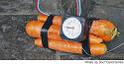

Cams that act directly on the valves seem to be pointier than cams that have Rube Goldberg machines between them and the valve. And Richard Holdener has a dyno test on YouTube showing that 1-3/4" and 1-7/8" headers produce identical power in the usable power range, it's only when you get to rpm that only dogs can hear that there is a miniscule difference.
Mar 26, 2022 | 09:00 PM
#17
TECH Apprentice
Joined: Jun 2011
Posts: 320
Likes: 157
The reason why I suggested the larger tubes in this case, was to compensate for the smallish duration split of the factory camshaft between intake and exhaust when used with the blower. PDS blower camshafts will have significantly longer duration on the exhaust. You have all that boost to aid cylinder filling, but you want to ensure to get all the exhaust evacuated, and not require the blower boost to perform that job (just adds heat to the fresh charge, acts as a restriction so less effective filling with same measured boost level). Maybe with the small cylinder displacement and the factory cam is so small and low lift; just the fact you're going from stock manifolds to small long tubes may have enough scavenging to make up for lack of exhaust duration.
The Comp has 14 degrees more exhaust than intake, which for a cathedral port is not a bad ratio for a PDS camshaft. They likely designed this as a mild L99 camshaft to maintain VVT but delete the AFM, and since the exhaust ports don't flow as well in comparison to the rectangular port intakes on those heads, they added more duration to the exhaust (typical for cam designs specific for the rectangular ports).
Either way, if you'll see a difference with the larger tubes, it won't be until the upper rpm range if the boost is moderate. So the 1 3/4" might be sufficient for your goals.
The Comp has 14 degrees more exhaust than intake, which for a cathedral port is not a bad ratio for a PDS camshaft. They likely designed this as a mild L99 camshaft to maintain VVT but delete the AFM, and since the exhaust ports don't flow as well in comparison to the rectangular port intakes on those heads, they added more duration to the exhaust (typical for cam designs specific for the rectangular ports).
Either way, if you'll see a difference with the larger tubes, it won't be until the upper rpm range if the boost is moderate. So the 1 3/4" might be sufficient for your goals.
Apr 4, 2022 | 09:14 PM
#18
Thread Starter
Launching!
Joined: Mar 2016
Posts: 201
Likes: 12
From: Cumberland Plateau
The reason why I suggested the larger tubes in this case, was to compensate for the smallish duration split of the factory camshaft between intake and exhaust when used with the blower. PDS blower camshafts will have significantly longer duration on the exhaust. You have all that boost to aid cylinder filling, but you want to ensure to get all the exhaust evacuated, and not require the blower boost to perform that job (just adds heat to the fresh charge, acts as a restriction so less effective filling with same measured boost level). Maybe with the small cylinder displacement and the factory cam is so small and low lift; just the fact you're going from stock manifolds to small long tubes may have enough scavenging to make up for lack of exhaust duration.
The Comp has 14 degrees more exhaust than intake, which for a cathedral port is not a bad ratio for a PDS camshaft. They likely designed this as a mild L99 camshaft to maintain VVT but delete the AFM, and since the exhaust ports don't flow as well in comparison to the rectangular port intakes on those heads, they added more duration to the exhaust (typical for cam designs specific for the rectangular ports).
Either way, if you'll see a difference with the larger tubes, it won't be until the upper rpm range if the boost is moderate. So the 1 3/4" might be sufficient for your goals.
The Comp has 14 degrees more exhaust than intake, which for a cathedral port is not a bad ratio for a PDS camshaft. They likely designed this as a mild L99 camshaft to maintain VVT but delete the AFM, and since the exhaust ports don't flow as well in comparison to the rectangular port intakes on those heads, they added more duration to the exhaust (typical for cam designs specific for the rectangular ports).
Either way, if you'll see a difference with the larger tubes, it won't be until the upper rpm range if the boost is moderate. So the 1 3/4" might be sufficient for your goals.
PDS = Positive Displacement Screw type blower? Is this correct?
VVT retards the cam timing as RPM increases in order to keep the valves open later, correct? The flip side is that they also open later, but I guess the trade off must be worth it or the factory wouldn't do it...
Apr 5, 2022 | 01:43 PM
#19
TECH Apprentice
Joined: Jun 2011
Posts: 320
Likes: 157
The simple version yes. Of course, since it's one camshaft all the events move, but the IVC has enough influence that it helps keep the torque low sitting in advanced position, and then retard to extend the power range and make more peak power.

Thread
Thread Starter
Forum
Replies
Last Post
Lthompson
FORCED INDUCTION
5
May 15, 2015 10:05 PM
InsaneDomestics
GMT 900 Trucks General Discussion
12
Nov 18, 2011 05:50 PM

