


My cheapish catch can
 Oct 23, 2008 | 08:05 PM
#31
 Oct 23, 2008 | 08:10 PM
#32

Thread Starter
TECH Senior Member
iTrader: (7)
Joined: Jun 2004
Posts: 5,446
Likes: 7
From: Central Kentucky

On a previous turbo car I owned I mounted a pair of those in series to see how much oil the first one was allowing to pass through. The second unit had very little ... about 1/100th of the oil the first one caught in it. I just bought mine from Home Depot because it was cheap and convenient. Because it was a turbo car I also added a check valve on the outlet of the second unit to prevent boost from pressurizing the crankcase.
All in all I don't really know how much a little oil in your intake is taking away if anything. If you were getting a quart every 1000 miles I would be worried but other than keeping it clean I can't see any major benefit of a catch can at all.
Maybe you guys can correct me on that and explain what it is the catch can fixes.
All in all I don't really know how much a little oil in your intake is taking away if anything. If you were getting a quart every 1000 miles I would be worried but other than keeping it clean I can't see any major benefit of a catch can at all.
Maybe you guys can correct me on that and explain what it is the catch can fixes.
i have no PCV system at all. i just run a vent in my oil cap on the passenger side then i took a spare passenger valve cover and put it backwards on the driverside with a vent in the oil cap. i dont get any oil smell and the filters on the caps are an off white now compaired to the white they were when i bought them.


I may wind up with something nicer looking but if it works, it works.
 Oct 23, 2008 | 08:21 PM
#33
 Oct 23, 2008 | 08:38 PM
#35
Clearing up misconceptions of PCV systems
--------------------------------------------------------------------------------
This is a copy of a reply to a customers questions regarding his C6 after a known tuner (one with no shop of his own) modified his PCV system & the potential damage this mod will do to the car. This is informational ONLY, and tuner does not matter, only the issues of modifying the crankcase ventilation system:
Understanding the GenIII, GenIV crankcase ventilation system & clearing up as much of the wrong info being given on the forums & in person by one known tuner that is eliminating it & the damage caused over time by this as well as the need for a proper catch can to prevent the oil mist from entering the intake manifold. Please note, there are several very good catch cans on the market that do an excellent job of preventing this problem, here are a couple that are popular on the Corvette Forum:
I’m referring to the capping off of the OEM system & running open hoses down to the ground from each valve cover.
OK, On the crankcase evac system: In the 30's/40's/50's cars had the crankcase ventilation system that this tuner uses. But it had one feature better...the intake of air was at the oil fill tube you see at the front of the old cars engine and it had an oiled steel wool filter & the down tube was one single tube that the venturi effect at speed would cause a suction (negative pressure) from this tube at the rear of the motor so the harmful vapors, caustic gasses, moisture, unburnt fuel, etc. would be evacuated or "flushed" from the crankcase where the heat from the motor at operating temperature would "flash off) these to a vapor. If they are not flushed out with filtered fresh air the vapors would re-condense inside the engine after cool-down & the droplets formed would drip back down into the oil & the damage done is slow, but over time irreversible. Remember, these motors rarely made it to 50k miles before needing rebuilt...part of the reason was less effective oil & other filters).
Now in the late 60's, the fresh air source evolved to include a filter & fitting in the air cleaner assembly (a small foam type that was to be replaced w/every oil change) and the vacuum (suction needed to flush the fresh air through the system) was sourced from the intake manifold vacuum (much more steady & effective because the old way would only pull air through while moving) and a PCV valve
to control the amount of vacuum & to act as a checkvalve to prevent back-flow from excess crankcase pressure or backfire from forcing oil mist into the intake where it contaminates the air charge & causes knock , lost power, and carbon build up on the pistons. Now look back & re-read.....the advancements of just adding filtered fresh air & steady vacuum had these motors going as much as 100,000 miles before needing rebuilds.
Now on to today’s where it is a system that is closed for emissions. The gasses that are drawn through the crankcase into the intake manifold are burnt through the combustion process & then the catalytic converters. Filtered fresh air is drawn from the throttle body front where it is filtered by the main air filter so no need for a secondary filter to get ignored & clogged. Then the fresh air enters the passenger side valve cover is pulled through the rockers, down the push rod valleys, through the heart of the crankcase where it flushes out all the harmful stuff mentioned earlier) , up the drivers side push rod valleys, through the drivers side rockers, out the rear of the drivers side valve cover, through the foam covered plastic hose around the rear of the motor, back up along the passenger side valve cover, to the PCV valve to the intake manifold & through the combustion process the amount of vacuum is regulated by the PCV valve. And a motor only pulls vacuum at an idle or low speed....at high RPM's the blow-by (yes, even the best motor has some) would push oil back into the intake if not for the checkvalve action of the PCV. This is where the catch can comes into play…..add the catch can to trap & condense the oil mist & vapor to prevent it from entering your intake. And with a FI application, adding a breather to allow for better filtered fresh air flow from the breather (which has a capacity of several times the OEM inlet) and it you have excessive crankcase pressure it would vent out the breather instead of into your throttle body & entering the intake from that passage.
Now on to an un-named tuners set-up: They eliminate all the PCV system & run 2 open hoses to hang near the ground. This does 2 things well, it prevents ANY oil from entering the intake, and it vents excess crankcase pressure down & away from the top of the motor where it makes a mess. But this is hardly worth a slow death to the motor as a result. As mentioned in the early days, a down tube provided the negative pressure to evac the gasses while at speed. This is called the "Venturi" effect. (swing a short hose around your head and hold your thumb over the end in your hand & feel the suction) With their set-up there is a hose run from each valve cover fitting to near the ground. At speed (even though they may be ending in the same place) one will pull more than the other, and the one with the least amount of pull will suck up dust, dirt, water, gravel, and who knows what DIRECTLY into your motor!!! And all the way through it! Just as pouring a cup of sand in the oil fill would do the same thing, but much slower. Following me here? They are doing this on theory & half thought only. The other harm is at idle or low speeds there is no vacuum pulling air through to flush out the harmful vapors & gasses!!! So when you shut your motor off, after it has cooled, you have all that crap re-condensing back into the motor. Just what all is in the crankcase while running? Water vapor #1 and unburnt fuel that dilutes the oil, and caustic gasses from the blow by....of which sulfuric acid is one main ingredient. So have you followed the science of this?
Hope this opened your eyes up a bit. Remember, I have been building performance & race motors since the early 70's, am a graduate of Reher Morrison Pro Stock engine building school, have run one of the winningest big$ bracket drag teams in the Eastern US for the past 7 years, have a shop of nothing but champion drag racers at the local, divisional, National, & World level. We race every single weekend somewhere in the country & we build & repair the motors that do this ourselves. These are motors costing $20k plus & making 1,000 hp NA. On our first C5 that currently has 176,000 miles on it, we started drag racing the vette when it had 25k miles on it & did not need to rebuild it until a nitrous "event" (screw-up) broke my #7 piston. This is a car raced every weekend at 2-3 events & many times doubled up w/2 drivers sharing. It has many times been driven 1,000 miles to a race, won or runnered up at many, and driven back. Do a Google search on RevXtreme drag race (spell rev xtreme several ways) and read the media coverage. It's easy to be convinced by some so and so who claims to know everything, but my whole team can back it up with knowledge, experience, qualification, accomplishments, and racing & testing & perfecting everything we do on a weekly basis.
--------------------------------------------------------------------------------
This is a copy of a reply to a customers questions regarding his C6 after a known tuner (one with no shop of his own) modified his PCV system & the potential damage this mod will do to the car. This is informational ONLY, and tuner does not matter, only the issues of modifying the crankcase ventilation system:
Understanding the GenIII, GenIV crankcase ventilation system & clearing up as much of the wrong info being given on the forums & in person by one known tuner that is eliminating it & the damage caused over time by this as well as the need for a proper catch can to prevent the oil mist from entering the intake manifold. Please note, there are several very good catch cans on the market that do an excellent job of preventing this problem, here are a couple that are popular on the Corvette Forum:
I’m referring to the capping off of the OEM system & running open hoses down to the ground from each valve cover.
OK, On the crankcase evac system: In the 30's/40's/50's cars had the crankcase ventilation system that this tuner uses. But it had one feature better...the intake of air was at the oil fill tube you see at the front of the old cars engine and it had an oiled steel wool filter & the down tube was one single tube that the venturi effect at speed would cause a suction (negative pressure) from this tube at the rear of the motor so the harmful vapors, caustic gasses, moisture, unburnt fuel, etc. would be evacuated or "flushed" from the crankcase where the heat from the motor at operating temperature would "flash off) these to a vapor. If they are not flushed out with filtered fresh air the vapors would re-condense inside the engine after cool-down & the droplets formed would drip back down into the oil & the damage done is slow, but over time irreversible. Remember, these motors rarely made it to 50k miles before needing rebuilt...part of the reason was less effective oil & other filters).
Now in the late 60's, the fresh air source evolved to include a filter & fitting in the air cleaner assembly (a small foam type that was to be replaced w/every oil change) and the vacuum (suction needed to flush the fresh air through the system) was sourced from the intake manifold vacuum (much more steady & effective because the old way would only pull air through while moving) and a PCV valve
to control the amount of vacuum & to act as a checkvalve to prevent back-flow from excess crankcase pressure or backfire from forcing oil mist into the intake where it contaminates the air charge & causes knock , lost power, and carbon build up on the pistons. Now look back & re-read.....the advancements of just adding filtered fresh air & steady vacuum had these motors going as much as 100,000 miles before needing rebuilds.
Now on to today’s where it is a system that is closed for emissions. The gasses that are drawn through the crankcase into the intake manifold are burnt through the combustion process & then the catalytic converters. Filtered fresh air is drawn from the throttle body front where it is filtered by the main air filter so no need for a secondary filter to get ignored & clogged. Then the fresh air enters the passenger side valve cover is pulled through the rockers, down the push rod valleys, through the heart of the crankcase where it flushes out all the harmful stuff mentioned earlier) , up the drivers side push rod valleys, through the drivers side rockers, out the rear of the drivers side valve cover, through the foam covered plastic hose around the rear of the motor, back up along the passenger side valve cover, to the PCV valve to the intake manifold & through the combustion process the amount of vacuum is regulated by the PCV valve. And a motor only pulls vacuum at an idle or low speed....at high RPM's the blow-by (yes, even the best motor has some) would push oil back into the intake if not for the checkvalve action of the PCV. This is where the catch can comes into play…..add the catch can to trap & condense the oil mist & vapor to prevent it from entering your intake. And with a FI application, adding a breather to allow for better filtered fresh air flow from the breather (which has a capacity of several times the OEM inlet) and it you have excessive crankcase pressure it would vent out the breather instead of into your throttle body & entering the intake from that passage.
Now on to an un-named tuners set-up: They eliminate all the PCV system & run 2 open hoses to hang near the ground. This does 2 things well, it prevents ANY oil from entering the intake, and it vents excess crankcase pressure down & away from the top of the motor where it makes a mess. But this is hardly worth a slow death to the motor as a result. As mentioned in the early days, a down tube provided the negative pressure to evac the gasses while at speed. This is called the "Venturi" effect. (swing a short hose around your head and hold your thumb over the end in your hand & feel the suction) With their set-up there is a hose run from each valve cover fitting to near the ground. At speed (even though they may be ending in the same place) one will pull more than the other, and the one with the least amount of pull will suck up dust, dirt, water, gravel, and who knows what DIRECTLY into your motor!!! And all the way through it! Just as pouring a cup of sand in the oil fill would do the same thing, but much slower. Following me here? They are doing this on theory & half thought only. The other harm is at idle or low speeds there is no vacuum pulling air through to flush out the harmful vapors & gasses!!! So when you shut your motor off, after it has cooled, you have all that crap re-condensing back into the motor. Just what all is in the crankcase while running? Water vapor #1 and unburnt fuel that dilutes the oil, and caustic gasses from the blow by....of which sulfuric acid is one main ingredient. So have you followed the science of this?
Hope this opened your eyes up a bit. Remember, I have been building performance & race motors since the early 70's, am a graduate of Reher Morrison Pro Stock engine building school, have run one of the winningest big$ bracket drag teams in the Eastern US for the past 7 years, have a shop of nothing but champion drag racers at the local, divisional, National, & World level. We race every single weekend somewhere in the country & we build & repair the motors that do this ourselves. These are motors costing $20k plus & making 1,000 hp NA. On our first C5 that currently has 176,000 miles on it, we started drag racing the vette when it had 25k miles on it & did not need to rebuild it until a nitrous "event" (screw-up) broke my #7 piston. This is a car raced every weekend at 2-3 events & many times doubled up w/2 drivers sharing. It has many times been driven 1,000 miles to a race, won or runnered up at many, and driven back. Do a Google search on RevXtreme drag race (spell rev xtreme several ways) and read the media coverage. It's easy to be convinced by some so and so who claims to know everything, but my whole team can back it up with knowledge, experience, qualification, accomplishments, and racing & testing & perfecting everything we do on a weekly basis.
Oct 23, 2008 | 09:42 PM
#36

 Oct 23, 2008 | 10:10 PM
#37

I am running a hybrid sort of system. No photo, so try to follow..
I installed a small catch can with a breather filter on it. It has 2 inlets. One inlet runs to the LS6 valley cover. The other inlet is running to each valley cover the hose splits and one to each valve cover. Seems to work pretty good...can be a little stinky at times. Allows the crankcase to breathe, prevents dirt from entering under vacuum and not putting oil into the combustion chambers. Has a petcock on the bottom to drain the yuck out.
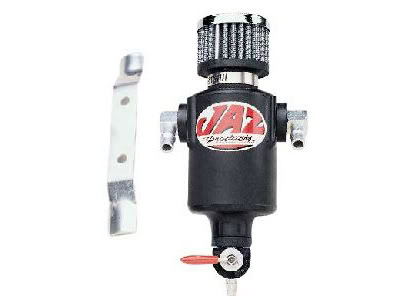
I installed a small catch can with a breather filter on it. It has 2 inlets. One inlet runs to the LS6 valley cover. The other inlet is running to each valley cover the hose splits and one to each valve cover. Seems to work pretty good...can be a little stinky at times. Allows the crankcase to breathe, prevents dirt from entering under vacuum and not putting oil into the combustion chambers. Has a petcock on the bottom to drain the yuck out.
Oct 23, 2008 | 11:09 PM
#38

I am running a hybrid sort of system. No photo, so try to follow..
I installed a small catch can with a breather filter on it. It has 2 inlets. One inlet runs to the LS6 valley cover. The other inlet is running to each valley cover the hose splits and one to each valve cover. Seems to work pretty good...can be a little stinky at times. Allows the crankcase to breathe, prevents dirt from entering under vacuum and not putting oil into the combustion chambers. Has a petcock on the bottom to drain the yuck out.

I installed a small catch can with a breather filter on it. It has 2 inlets. One inlet runs to the LS6 valley cover. The other inlet is running to each valley cover the hose splits and one to each valve cover. Seems to work pretty good...can be a little stinky at times. Allows the crankcase to breathe, prevents dirt from entering under vacuum and not putting oil into the combustion chambers. Has a petcock on the bottom to drain the yuck out.
Oct 23, 2008 | 11:18 PM
#39

The newer pvc valves are a fixed orifice design, which is why there is no check valve. What you have is correct for your year.

