


UAW Documents reveal future truck plans.
 Oct 2, 2007 | 01:02 PM
#1

Thread Starter
High on diesel fumes
iTrader: (70)
Joined: Mar 2005
Posts: 12,658
Likes: 3
From: Phoenix, AZ
 UAW Documents reveal future truck plans.
http://www.google.com/search?hl=en&c...XX&btnG=Search
http://www.futureoftheunion.com/docs...er149pages.pdf
http://www.pickuptruck.com/html/news...lledplans.html
United Auto Workers Agreement Spills Beans on General Motors' Future Truck Plans
By: Mike Levine Posted: 09-28-07 18:15 PT
© 2007 PickupTruck.com
Page: [1]
As if a recent labor strike wasn't enough of a problem for General Motors, the agreement between GM and the United Auto Workers union has revealed GM's future pickup truck product plans.
The GMT 900 platform underpinning the current Chevrolet Silverado and GMC Sierra full size pickups, as well as GM's full size SUVs, will be replaced in 2012 with the new C3XX architecture.
The 'XX' in C3XX means the final two digit identifier has not been determined yet.
GMT 900 pickups will continue to be produced through 2011 when production will shift to C3XX trucks in 2012 for the 2013 model year at both the Pontiac, Michigan and Flint, Michigan truck plants.
The midsize Chevrolet Colorado and GMC Canyon pickups will continue to be produced through 2011 at their factory in Shreveport, Louisiana.
Page: [1]
http://www.futureoftheunion.com/docs...er149pages.pdf
http://www.pickuptruck.com/html/news...lledplans.html
United Auto Workers Agreement Spills Beans on General Motors' Future Truck Plans
By: Mike Levine Posted: 09-28-07 18:15 PT
© 2007 PickupTruck.com
Page: [1]
As if a recent labor strike wasn't enough of a problem for General Motors, the agreement between GM and the United Auto Workers union has revealed GM's future pickup truck product plans.
The GMT 900 platform underpinning the current Chevrolet Silverado and GMC Sierra full size pickups, as well as GM's full size SUVs, will be replaced in 2012 with the new C3XX architecture.
The 'XX' in C3XX means the final two digit identifier has not been determined yet.
GMT 900 pickups will continue to be produced through 2011 when production will shift to C3XX trucks in 2012 for the 2013 model year at both the Pontiac, Michigan and Flint, Michigan truck plants.
The midsize Chevrolet Colorado and GMC Canyon pickups will continue to be produced through 2011 at their factory in Shreveport, Louisiana.
Page: [1]
Here's one little tidbit that I'm not too thrilled about....
According to the document, C3XX pickups will feature a new 'Gen V' 6.2-liter dual overhead cam (DOHC) V8 engine - a major departure from GM's traditional overhead valve (OHV) pushrod engine design used in its trucks, like the ‘Gen IV’ 403-horsepower / 417 lb-feet L92 6.2-liter V8 under the hood of the GMC Sierra Denali. The only DOHC V8 GM currently offers is Cadillac’s 4.6-liter Northstar engine.
The Gen V 6.2 motor will use variable valve timing (VVT) like the Gen IV 6.2, but the use of dual overhead cams holds the promise of four valves per cylinder instead of the current two valves, for better intake and exhaust flow and increased power. This is a similar setup to the 5.7-liter i-Force V8 used in the Toyota Tundra, but the Gen V 6.2 will also offer GM's active fuel management (AFM) system. AFM shuts down half the cylinders during steady state running for improved fuel economy – a feature not currently available for the i-Force. Up until this point, it’s been conventional wisdom that implementing cylinder deactivation on OHC engines is impractical for reasons of cost and complexity.
Pushrod engines won’t be disappearing entirely from GM’s truck line. A new ‘Gen V’ OHV V8 will replace the current 320-hp / 340 lb-feet 5.3-liter V8. Apparently the final displacement hasn’t been determined yet, because it’s referred to as 5X.
The new 5X gasoline engine will feature spark ignition direct injection (SIDI), similar to a diesel's fuel injection setup but still using a spark plug to ignite the fuel instead of diesel's high compression ratio that causes the fuel air mixture to auto-ignite. SIDI places the fuel injector right inside the combustion chamber, so fuel can be directly mixed with air entering the chamber during the intake stroke instead of before it enters the chamber, like in a conventional multi-port fuel injected gas engine. This approach enables a leaner burn of the fuel at higher compression ratios than current gas engines, resulting in greater fuel economy, cleaner emissions, and more power.
Initial production of both engines is slated to start in 2011 with full production in 2012.
Of course, it's possible that because this information is still approximately three years out in time, plans detailed in this document for the full size truck powertrains could still change.
The Gen V 6.2 motor will use variable valve timing (VVT) like the Gen IV 6.2, but the use of dual overhead cams holds the promise of four valves per cylinder instead of the current two valves, for better intake and exhaust flow and increased power. This is a similar setup to the 5.7-liter i-Force V8 used in the Toyota Tundra, but the Gen V 6.2 will also offer GM's active fuel management (AFM) system. AFM shuts down half the cylinders during steady state running for improved fuel economy – a feature not currently available for the i-Force. Up until this point, it’s been conventional wisdom that implementing cylinder deactivation on OHC engines is impractical for reasons of cost and complexity.
Pushrod engines won’t be disappearing entirely from GM’s truck line. A new ‘Gen V’ OHV V8 will replace the current 320-hp / 340 lb-feet 5.3-liter V8. Apparently the final displacement hasn’t been determined yet, because it’s referred to as 5X.
The new 5X gasoline engine will feature spark ignition direct injection (SIDI), similar to a diesel's fuel injection setup but still using a spark plug to ignite the fuel instead of diesel's high compression ratio that causes the fuel air mixture to auto-ignite. SIDI places the fuel injector right inside the combustion chamber, so fuel can be directly mixed with air entering the chamber during the intake stroke instead of before it enters the chamber, like in a conventional multi-port fuel injected gas engine. This approach enables a leaner burn of the fuel at higher compression ratios than current gas engines, resulting in greater fuel economy, cleaner emissions, and more power.
Initial production of both engines is slated to start in 2011 with full production in 2012.
Of course, it's possible that because this information is still approximately three years out in time, plans detailed in this document for the full size truck powertrains could still change.
 Oct 2, 2007 | 01:22 PM
#4
Thread Starter
High on diesel fumes
iTrader: (70)
Joined: Mar 2005
Posts: 12,658
Likes: 3
From: Phoenix, AZ
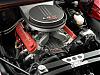
Sorry guys, I was referring to the DOHC portion. I think direct injection will be beneficial. I guess my only bitch with DOHC is size and complexity. I have only worked on one DOHC motor before and I hated it.
Oct 2, 2007 | 01:35 PM
#5
But as a performance and economy stand point I feel we will be gaining a great deal.


Trending Topics
Oct 2, 2007 | 04:05 PM
#8

 Oct 2, 2007 | 04:05 PM
#9
Thread Starter
High on diesel fumes
iTrader: (70)
Joined: Mar 2005
Posts: 12,658
Likes: 3
From: Phoenix, AZ
Who knows?? Maybe things will change. I think I remember reading that when the C5 Vette went into design phases that they toyed with running a DOHC motor in that too. They drove two Vettes side by side, one was DOHC and one was a prototype LS1, and the LS1 had much better characteristics all around.