


Low oil pressure on LQ4 swap
 Jun 25, 2010 | 10:12 PM
#1

Thread Starter
Teching In
Joined: Mar 2008
Posts: 41
Likes: 0
 Low oil pressure on LQ4 swap
Today I completed a swap of an '02 LQ4 into my '03 Avalanche in place of the previous 140k mile LM7. Gauge cluster reads oil pressure at idle is roughly 20 psi. (both cold and hot). Prior to the swap I believe it was around 40. I've run the engine up to 3k and it quickly increases to over 40 psi. I'm inclined to trust the gauge, however tomorrow I'll try it with a mechanical gauge to verify. I do not hear any knocking, however I do have an exhaust leak on one of my headers that may be masking another noise.
For an initial tune, I downloaded an LQ4 tune and swapped out the VE, spark, and a few other tables into my stock tune. It's still off and doesn't like to idle by itself, but with a little bit of throttle it seems to run fine. I have not driven it yet, only test fired in the driveway.
The main reason for my swap was what I think is a cracked head on my lm7. It had a constant, slow consumption of water, even after a water pump replacement.
Background on the motor: I found the engine locally. Mileage unknown, however it was said to have less than 100k. Pulling the pan, the bores looked ok. There was wear, however the crosshatch could still be seen in most places. While the motor was out I did a full lower gasket set, timing chain, and oil pump. When I replaced the oil pump, I did also made sure to use a new o-ring. I probably should have, however I did not pull any rod or main bearings to assess. Judging from the bore and the mileage I was told, I assumed (maybe incorrectly) the bearings would be ok.
What is considered an acceptable range of oil pressure at idle? From past experience with Gen III motors it should be 40, but not sure how far "acceptable" falls.
This is my first foray into the Gen III internals, but from what I've read there could be a number of reasons for the pressure drop. (Oil pump not seated, pick-up o-ring, pickup screen clogged, pressure relief valve) Is there anything else I should be looking into in regards to my lost pressure? My fear is that I got taken on the motor, however I haven't yet verified that. I'm just looking for troubleshooting advice. Even if I did get taken, I'm just looking to move forward from here.
The engine is currently sitting in the truck, fully dressed. I had never before worked on an IFS 4wd vehicle. Is it difficult to drop the pan while the engine is in? I'm just dreading pulling that engine again having just finished it hours ago. In addition to checking the aforementioned items I'd like to pull a main bearing to look at it. For the hassle I've already gone through, I'd prefer to spin a new set of mains in.
I'm sure a few threads have slipped through my hands, even after searching around. If I am missing something obvious please point me in the right direction.
Thanks for your time, I truly do appreciate any advice someone could send my way.
For an initial tune, I downloaded an LQ4 tune and swapped out the VE, spark, and a few other tables into my stock tune. It's still off and doesn't like to idle by itself, but with a little bit of throttle it seems to run fine. I have not driven it yet, only test fired in the driveway.
The main reason for my swap was what I think is a cracked head on my lm7. It had a constant, slow consumption of water, even after a water pump replacement.
Background on the motor: I found the engine locally. Mileage unknown, however it was said to have less than 100k. Pulling the pan, the bores looked ok. There was wear, however the crosshatch could still be seen in most places. While the motor was out I did a full lower gasket set, timing chain, and oil pump. When I replaced the oil pump, I did also made sure to use a new o-ring. I probably should have, however I did not pull any rod or main bearings to assess. Judging from the bore and the mileage I was told, I assumed (maybe incorrectly) the bearings would be ok.
What is considered an acceptable range of oil pressure at idle? From past experience with Gen III motors it should be 40, but not sure how far "acceptable" falls.
This is my first foray into the Gen III internals, but from what I've read there could be a number of reasons for the pressure drop. (Oil pump not seated, pick-up o-ring, pickup screen clogged, pressure relief valve) Is there anything else I should be looking into in regards to my lost pressure? My fear is that I got taken on the motor, however I haven't yet verified that. I'm just looking for troubleshooting advice. Even if I did get taken, I'm just looking to move forward from here.
The engine is currently sitting in the truck, fully dressed. I had never before worked on an IFS 4wd vehicle. Is it difficult to drop the pan while the engine is in? I'm just dreading pulling that engine again having just finished it hours ago. In addition to checking the aforementioned items I'd like to pull a main bearing to look at it. For the hassle I've already gone through, I'd prefer to spin a new set of mains in.
I'm sure a few threads have slipped through my hands, even after searching around. If I am missing something obvious please point me in the right direction.
Thanks for your time, I truly do appreciate any advice someone could send my way.
Jun 26, 2010 | 10:54 AM
#2
Thread Starter
Teching In
Joined: Mar 2008
Posts: 41
Likes: 0
Could someone at least weigh in on if it's easier to pull the motor again, or get to it on the under side?
I realize I couldn't do anything about cam bearings, but I'm contemplating replacing rod and mains in addition to checking everything at the pump.
I realize I couldn't do anything about cam bearings, but I'm contemplating replacing rod and mains in addition to checking everything at the pump.
Jun 26, 2010 | 11:25 AM
#3

From your description and my opinion only but I'd suspect the dreaded pickup tube o-ring. Since you had the pump off and disturbed it. If the bearing clearances were bad enough to only see 20 psi at idle I doubt you'd pick up near "normal" pressures at RPM. From your description of the motor I doubt it has enough wear on it to be bearings. Since you were in it and didn't freak out from debris and such I doubt enough crud floating around to clog pickup screens. Did it have the oil filter on it. How did it look?
If you decide to tear back into it. I personally would pull the motor and start my looks at the oil pump side. I've pulled motors. It isn't bad. I've worked UNDER vehicles and it sucks.
If you decide to tear back into it. I personally would pull the motor and start my looks at the oil pump side. I've pulled motors. It isn't bad. I've worked UNDER vehicles and it sucks.
Last edited by KySilverado; Jun 26, 2010 at 11:31 AM.
Jun 26, 2010 | 12:46 PM
#4
Thread Starter
Teching In
Joined: Mar 2008
Posts: 41
Likes: 0
Thanks Roger, I appreciate the reply.
The motor did not have a filter on it when I picked it up. The pan had been off, however not cleaned out. I didn't notice any debris when cleaning it up, just a little gunk in the bottom of the pan. It wasn't anything you wouldn't expect from around 100k miles.
After having a fresh look at it this morning I would agree that it's better to pull the motor. I think I was just a little disillusioned having put in all that work.
I ran to a few parts stores to try to piece together an adapter to get from the oil sending unit's m16 x1.5 thread to an oil gauge, but haven't had any luck.
I had never noticed it before, but my stock gauge looks to be a little miscalibrated. It appears to hold 5 lbs when the key is in the off position. I now don't really trust the actual values it shows, but I do know it's much less than the old motor, in addition to wild swings dependent upon RPM.
With that all said, since I'm pulling the motor I think I'll replace the rod and main bearings to be on the safe side. I'm also planning on at least pulling the cam to check bearings there. Prior to yesterday I wasn't aware of how bad these engines like to much them up. Given the fact that I've run it with low oil pressure I'm a little afraid I may have done additional damage. Worst case scenario, I have a crank in my 5.3 (I believe the LQ4 and LM7 share a common 92mm stroke), and a torquer v2 that was earmarked for a different build. With a new set of bearings I'd hopefully be set.
EDIT: After doing some searching, I have yet to find exactly what I need to be looking for when it comes to the oil pump o-ring. Is there a common problem or install error I need to look for? While I was reassembling, I made sure it was seated properly on the pickup, and that it seemed even while attaching the pickup to the pump.
The motor did not have a filter on it when I picked it up. The pan had been off, however not cleaned out. I didn't notice any debris when cleaning it up, just a little gunk in the bottom of the pan. It wasn't anything you wouldn't expect from around 100k miles.
After having a fresh look at it this morning I would agree that it's better to pull the motor. I think I was just a little disillusioned having put in all that work.
I ran to a few parts stores to try to piece together an adapter to get from the oil sending unit's m16 x1.5 thread to an oil gauge, but haven't had any luck.
I had never noticed it before, but my stock gauge looks to be a little miscalibrated. It appears to hold 5 lbs when the key is in the off position. I now don't really trust the actual values it shows, but I do know it's much less than the old motor, in addition to wild swings dependent upon RPM.
With that all said, since I'm pulling the motor I think I'll replace the rod and main bearings to be on the safe side. I'm also planning on at least pulling the cam to check bearings there. Prior to yesterday I wasn't aware of how bad these engines like to much them up. Given the fact that I've run it with low oil pressure I'm a little afraid I may have done additional damage. Worst case scenario, I have a crank in my 5.3 (I believe the LQ4 and LM7 share a common 92mm stroke), and a torquer v2 that was earmarked for a different build. With a new set of bearings I'd hopefully be set.
EDIT: After doing some searching, I have yet to find exactly what I need to be looking for when it comes to the oil pump o-ring. Is there a common problem or install error I need to look for? While I was reassembling, I made sure it was seated properly on the pickup, and that it seemed even while attaching the pickup to the pump.
Jun 26, 2010 | 04:00 PM
#5
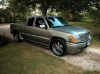
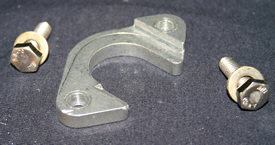
Beings you’re looking at pulling the motor and hopefully finding the culprit to your low oil pressure, which is likely due to either the o-ring or relief valve in the pump itself, I just threw together some info that may be helpful. You may already have all the info you need, but if not, hopefully this will help some. You will of course need to determine which pick-up tube o-ring that you actually need.
Your pressure is above what the GM lists as the minimum, so hopefully everything will check out OK.
Oil Pressure (Minimum-Hot)
6.0 psig at 1,000 engine rpm
18.0 psig at 2,000 engine rpm
24.0 psig at 4,000 engine rpm
Oil Pump Screen-to-Oil Pump Bolt - 106 lb in
Oil Pump-to-Engine Block Bolts - 18 lb ft
Oil Pump Cover Bolts - 106 lb in
Oil Pump Relief Valve Plug - 106 lb in
Oil Pump Screen Nuts - 18 lb ft
Important: Push the oil pump screen tube completely into the oil pump prior to tightening the bolt. Do not allow the bolt to pull the tube into the pump. Lubricate a NEW oil pump screen O-ring seal with clean engine oil.
Something you could add for extra insurance while you’re in there with the pan off is an Oil Pump Pickup Tube Girdle from BRP Hot Rods. Stock, the pick-up tube will use only one bolt to attach the tube to the pump and is generally fine, except when the mounting flange has been tweaked. Normally it is too much of a pain to install in the vehicle with the pan on. Hell, it's generally too much of a pain to do the pump in the vehicle with the pan on.
Connecting Rod Bearing Clearance (Production) 0.0009-0.0025 in
Connecting Rod Bearing Clearance (Service Limit) 0.0009-0.003 in
Connecting Rod Side Clearance 0.00433-0.02 in
Crankshaft Bearing Cap Bolts (Inner Bolts-First Pass in Sequence) 15 lb ft
Crankshaft Bearing Cap Bolts (Inner Bolts-Final Pass in Sequence) 80 degrees
Crankshaft Bearing Cap Side Bolts 18 lb ft
Crankshaft Bearing Cap Bolts (Outer Studs-First Pass in Sequence) 15 lb ft
Crankshaft Bearing Cap Bolts (Outer Studs-Final Pass in Sequence) 51 degrees
Crankshaft Oil Deflector Nuts 18 lb ft
Crankshaft Bearing Clearance (Production) 0.0008-0.0021 in
Crankshaft Bearing Clearance (Service Limit) 0.0008-0.0025 in
Connecting Rod Bolts-Second Design (First Pass) 15 lb ft
Connecting Rod Bolts-Second Design (Final Pass) 75 degrees
Your pressure is above what the GM lists as the minimum, so hopefully everything will check out OK.
Oil Pressure (Minimum-Hot)
6.0 psig at 1,000 engine rpm
18.0 psig at 2,000 engine rpm
24.0 psig at 4,000 engine rpm
Oil Pump Screen-to-Oil Pump Bolt - 106 lb in
Oil Pump-to-Engine Block Bolts - 18 lb ft
Oil Pump Cover Bolts - 106 lb in
Oil Pump Relief Valve Plug - 106 lb in
Oil Pump Screen Nuts - 18 lb ft
Important: Push the oil pump screen tube completely into the oil pump prior to tightening the bolt. Do not allow the bolt to pull the tube into the pump. Lubricate a NEW oil pump screen O-ring seal with clean engine oil.
Something you could add for extra insurance while you’re in there with the pan off is an Oil Pump Pickup Tube Girdle from BRP Hot Rods. Stock, the pick-up tube will use only one bolt to attach the tube to the pump and is generally fine, except when the mounting flange has been tweaked. Normally it is too much of a pain to install in the vehicle with the pan on. Hell, it's generally too much of a pain to do the pump in the vehicle with the pan on.
Connecting Rod Bearing Clearance (Production) 0.0009-0.0025 in
Connecting Rod Bearing Clearance (Service Limit) 0.0009-0.003 in
Connecting Rod Side Clearance 0.00433-0.02 in
Crankshaft Bearing Cap Bolts (Inner Bolts-First Pass in Sequence) 15 lb ft
Crankshaft Bearing Cap Bolts (Inner Bolts-Final Pass in Sequence) 80 degrees
Crankshaft Bearing Cap Side Bolts 18 lb ft
Crankshaft Bearing Cap Bolts (Outer Studs-First Pass in Sequence) 15 lb ft
Crankshaft Bearing Cap Bolts (Outer Studs-Final Pass in Sequence) 51 degrees
Crankshaft Oil Deflector Nuts 18 lb ft
Crankshaft Bearing Clearance (Production) 0.0008-0.0021 in
Crankshaft Bearing Clearance (Service Limit) 0.0008-0.0025 in
Connecting Rod Bolts-Second Design (First Pass) 15 lb ft
Connecting Rod Bolts-Second Design (Final Pass) 75 degrees
 Jun 26, 2010 | 07:06 PM
#6
Thread Starter
Teching In
Joined: Mar 2008
Posts: 41
Likes: 0
This afternoon I decided to get after it and finished pulling the motor about an hour ago. It's amazing how much faster things go when you're not fighting rusted bolts.
Looking at the above posted info, the motor was barely meeting spec at idle. Higher in the RPM band was clearly in spec.
I'm going to pull the bottom end apart later this evening to see who the culprit is. I do feel that I'm safe on my o-ring, but I'm thinking I may have over torqued the oil pump. I can't remember exactly what I used, but it was higher than the 18 lb ft listed above.
One thing that does have me a little concerned is the fact that I had some shavings on the plug when I was draining the oil. It's obviously not bearing material, but have no idea where it came from.
Looking at the above posted info, the motor was barely meeting spec at idle. Higher in the RPM band was clearly in spec.
I'm going to pull the bottom end apart later this evening to see who the culprit is. I do feel that I'm safe on my o-ring, but I'm thinking I may have over torqued the oil pump. I can't remember exactly what I used, but it was higher than the 18 lb ft listed above.
One thing that does have me a little concerned is the fact that I had some shavings on the plug when I was draining the oil. It's obviously not bearing material, but have no idea where it came from.
Jun 26, 2010 | 08:08 PM
#7
Thread Starter
Teching In
Joined: Mar 2008
Posts: 41
Likes: 0
How much of the pickup tube screen would need to be covered to cause oil pressure issues? I did find a moderate amount of organic material in the screen. I don't remember seeing it before, so I'm wondering if it flushed out of the motor somewhere else.
If the pickup tube were the main issue, would I be able to attain the 35-40 psi I'm seeing at 3k?
I'm quickly finding there must be more to this engine's story than I was told.
If the pickup tube were the main issue, would I be able to attain the 35-40 psi I'm seeing at 3k?
I'm quickly finding there must be more to this engine's story than I was told.
Trending Topics
 Jun 27, 2010 | 01:40 PM
#9
Thread Starter
Teching In
Joined: Mar 2008
Posts: 41
Likes: 0
I feel pretty confident that the O-ring was good. It was seated properly, and when installing I did seat it fully prior to tightening the bolt. When I pulled the O-ring back off it didn't have any cuts anywhere along it.
On another note, I've decided to at least check the bearing clearance before replacing them. If for nothing else, my piece of mind. On a standard small block you can tap the main caps back and forth a little bit to loosen them up. I noticed that the book calls for a main cap puller for the Gen III motors. Are there any tricks to removing them without a puller, or will I have to order one? I've searched quite a bit, and have yet to come up with much discussion of it.
Edit: Thinking I couldn't do any more damage, I gently pried the caps back and forth and removed them pretty easily. In the classic case of "buyer beware" it looks like a trash truck ran through the mains. The bearings are totally shot, but I'm hoping to at least save the crank.
Should I even go any further, looking into the cam bearings? Or is it a foregone conclusion that I'll probably see the same thing there?
On another note, I've decided to at least check the bearing clearance before replacing them. If for nothing else, my piece of mind. On a standard small block you can tap the main caps back and forth a little bit to loosen them up. I noticed that the book calls for a main cap puller for the Gen III motors. Are there any tricks to removing them without a puller, or will I have to order one? I've searched quite a bit, and have yet to come up with much discussion of it.
Edit: Thinking I couldn't do any more damage, I gently pried the caps back and forth and removed them pretty easily. In the classic case of "buyer beware" it looks like a trash truck ran through the mains. The bearings are totally shot, but I'm hoping to at least save the crank.
Should I even go any further, looking into the cam bearings? Or is it a foregone conclusion that I'll probably see the same thing there?
Last edited by RhinoSS; Jun 27, 2010 at 03:13 PM.
Jun 27, 2010 | 08:09 PM
#10
Thread Starter
Teching In
Joined: Mar 2008
Posts: 41
Likes: 0
I think I finally found the cause of the low oil pressure.
When I was pulling the cam, it would stick as the 2nd journal was coming into the 1st bearing. I was very careful as to not burr the bearings, as I was looking to reuse them if they checked out. I pushed it back in a little and heard a chattering noise as I rotated the cam. It looks like the 3rd cam bearing was extremely loose in the bore. Judging by the discoloration on the bearing, it appears it had walked out just enough to let oil flood by. Searching on LS1tech, it appears this isn't completely out of the ordinary on these motors.
Out of curiosity I plastigauged the rods and mains. Both rods and mains were in spec. The rod bearings looked remarkable in comparison with the mains. After getting a second opinion on the crank, I think it is easily serviceable. All bearings appear to be standard size, so that's a plus.
Does anyone have a service spec for the cam journal bores? Before I order bearings I'd like to insure that the same thing won't happen a second time.
When I was pulling the cam, it would stick as the 2nd journal was coming into the 1st bearing. I was very careful as to not burr the bearings, as I was looking to reuse them if they checked out. I pushed it back in a little and heard a chattering noise as I rotated the cam. It looks like the 3rd cam bearing was extremely loose in the bore. Judging by the discoloration on the bearing, it appears it had walked out just enough to let oil flood by. Searching on LS1tech, it appears this isn't completely out of the ordinary on these motors.
Out of curiosity I plastigauged the rods and mains. Both rods and mains were in spec. The rod bearings looked remarkable in comparison with the mains. After getting a second opinion on the crank, I think it is easily serviceable. All bearings appear to be standard size, so that's a plus.
Does anyone have a service spec for the cam journal bores? Before I order bearings I'd like to insure that the same thing won't happen a second time.