


lq9 or lq4 what the difference
 Dec 28, 2010 | 06:36 PM
#1

Thread Starter
TECH Apprentice
Joined: Dec 2010
Posts: 326
Likes: 0
From: canada
 lq9 or lq4 what the difference
just wondering what the difffernce is between the lq9 and lq4. witch is better
maybe put a cam in it or heads. going to put in my 02 silverado z71. i know the blocks are the same its just a re and re just use the 5.3 flywheel. anything else i need to change torqe conveter or something. thanks. waht is the power in the lq9 or lq4 motors. or os a 6.2 escalde motor better. it just for a street ruck for better towing. thanks.
maybe put a cam in it or heads. going to put in my 02 silverado z71. i know the blocks are the same its just a re and re just use the 5.3 flywheel. anything else i need to change torqe conveter or something. thanks. waht is the power in the lq9 or lq4 motors. or os a 6.2 escalde motor better. it just for a street ruck for better towing. thanks.
Dec 28, 2010 | 06:59 PM
#2

The lq9 has flat top pistons for more compression and a little mor hp, other than that they are the same. You shouldn't have to change anything if you already have a 5.3. Unless you wanted to add a higher stall torque converter for more performance. I think the 6.0 is rated at 345hp from the factory and the 6.2 is 403hp.
As far as the lq9 vs the lq4 in performance when modded im not sure if there will be a huge difference, maybe someone who knows more will chime in.
As far as the lq9 vs the lq4 in performance when modded im not sure if there will be a huge difference, maybe someone who knows more will chime in.
 Dec 28, 2010 | 08:44 PM
#4

its a very small boost in hp from an lq9 to an lq4 but can be taken care of by lifting conpression in an lq4 ! then its all the same thing!
lq4=9.4:1
lq9=10.1:1
so an lq4 on some 64cc heads woild be rite next to an lq9 IMO!
lq4=9.4:1
lq9=10.1:1
so an lq4 on some 64cc heads woild be rite next to an lq9 IMO!
Dec 28, 2010 | 09:21 PM
#5
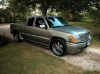
As has already been said a hundred times over, the LQ9 as released in 2002 was equipped with a 10.0:1 compression ratio and was rated at 345 hp at 5200 rpm and 380 lb•ft of torque at 4000 rpm, while the few other ½ tons that were equipped with a 6.0L and ¾ and 1 tons were equipped with the LQ4's with a 9.4:1 compression ratio and were rated at 300 hp at 4400 rpm and 365 lb•ft of torque at 4000 rpm in the ¾ and 1 tons, whereas the same motor was rated as high as 335 hp at 5200 rpm and 375 lb•ft of torque at 4000 rpm in vehicles such as the Yukon Denali in 2006, while all being the same configuration. The power differences in the LQ4’s were exhaust and tuning related.
The original 1999 & 2000 model LQ4 6.0L’s were equipped with an iron block with iron heads and an extended length crank shaft. In 2001 the LQ4 was released with aluminum heads and the more common 3.622” short crankshaft that was shared with the 5.3L & 5.7L engines. There were running changes that were made to the LQ4 throughout the years as improvements, such as coated skirts on the pistons around 2003, heavier duty floating pin rods and matching pistons somewhere around 2004 to 2005.
If I were looking for an engine, it would be a 2005 or newer LQ4 with all the improvements already incorporated or an LQ9 that already had the improvements from the start. Never-the-less all the aluminum headed 6.0L’s are a good candidate and strong, it’s just some may be more desirable if run as is. If you are going into it with the intention of rebuilding or stroking and replacing the internal components anyway, all the 6.0L blocks are acceptable all the way back to the original 1999 models. Some even go so far as to say the 1999 thru 2003 blocks with the 3 different length head bolts are more desirable, as the head bolt holes extended down towards the bottom of the cylinder barrels, while the newer blocks with the shorter head bolts have tendency to develop cracking. I say no matter what the year model, if you’re going to build one, have it checked out and if it passes go for it.
The original 1999 & 2000 model LQ4 6.0L’s were equipped with an iron block with iron heads and an extended length crank shaft. In 2001 the LQ4 was released with aluminum heads and the more common 3.622” short crankshaft that was shared with the 5.3L & 5.7L engines. There were running changes that were made to the LQ4 throughout the years as improvements, such as coated skirts on the pistons around 2003, heavier duty floating pin rods and matching pistons somewhere around 2004 to 2005.
If I were looking for an engine, it would be a 2005 or newer LQ4 with all the improvements already incorporated or an LQ9 that already had the improvements from the start. Never-the-less all the aluminum headed 6.0L’s are a good candidate and strong, it’s just some may be more desirable if run as is. If you are going into it with the intention of rebuilding or stroking and replacing the internal components anyway, all the 6.0L blocks are acceptable all the way back to the original 1999 models. Some even go so far as to say the 1999 thru 2003 blocks with the 3 different length head bolts are more desirable, as the head bolt holes extended down towards the bottom of the cylinder barrels, while the newer blocks with the shorter head bolts have tendency to develop cracking. I say no matter what the year model, if you’re going to build one, have it checked out and if it passes go for it.

Thread
Thread Starter
Forum
Replies
Last Post
2001, 2003, 60, 60l, aluminum, change, compression, configurations, denali, difference, differences, exhaust, lq4, lq9, motors, ratio, replace
