


which ignition system for forced induction

 Feb 23, 2012 | 10:50 PM
#23


Joined: Jan 2006
Posts: 16,282
Likes: 438
From: Huntsville, AL

Correct. NGK plugs get colder as the number increases. Everyone else is the opposite.
Plug heat range is a comprimise of high-power stability and low-power driveability. Meaning plugs that are meant for putting around in a 200hp engine are going to be far too hot for 20lbs of boost on anything. And the plugs suitable for 20 pounds are not going to be as smooth at low load, being most noticeable at idle. Colder plugs are also more susceptible to fouling at low loads due to it not getting hot enough to burn off the carbon deposits. Just something to think about.
Plug heat range is a comprimise of high-power stability and low-power driveability. Meaning plugs that are meant for putting around in a 200hp engine are going to be far too hot for 20lbs of boost on anything. And the plugs suitable for 20 pounds are not going to be as smooth at low load, being most noticeable at idle. Colder plugs are also more susceptible to fouling at low loads due to it not getting hot enough to burn off the carbon deposits. Just something to think about.
Feb 23, 2012 | 10:54 PM
#24
You want the hottest plugs possible, that will run properly withou turning into a "glow plug" and causing pre-ignition. You have to read the plugs to see what's going on in there.
Feb 23, 2012 | 10:54 PM
#25

Its not so bad with the new cam cause it doesn't pull as much vacuum, but the last cam I ran would cruise around 40mph at like 16inhg, and the TR7s made it chug real hard cause of the random misfire. Converter absorbs it unlocked, but locked up it got nasty. Plug gap can mitigate to some extent, but colder high power plugs will never quite drive the same as stock stuff.
Feb 23, 2012 | 10:58 PM
#26

Correct. NGK plugs get colder as the number increases. Everyone else is the opposite.
Plug heat range is a comprimise of high-power stability and low-power driveability. Meaning plugs that are meant for putting around in a 200hp engine are going to be far too hot for 20lbs of boost on anything. And the plugs suitable for 20 pounds are not going to be as smooth at low load, being most noticeable at idle. Colder plugs are also more susceptible to fouling at low loads due to it not getting hot enough to burn off the carbon deposits. Just something to think about.
Plug heat range is a comprimise of high-power stability and low-power driveability. Meaning plugs that are meant for putting around in a 200hp engine are going to be far too hot for 20lbs of boost on anything. And the plugs suitable for 20 pounds are not going to be as smooth at low load, being most noticeable at idle. Colder plugs are also more susceptible to fouling at low loads due to it not getting hot enough to burn off the carbon deposits. Just something to think about.
Never thought bout that. Im still runnin the same 30 gap TR6 plugs i was running couple years ago when i had the turbo on.
Prolly gonna put the tr6 in the samurai and these new tr5's in the silverado. Hum.
Feb 23, 2012 | 11:09 PM
#27
Joined: Jan 2006
Posts: 16,282
Likes: 438
From: Huntsville, AL
Roger pretty much nailed it. I think Chase was using the heat range 8 plugs on his SSS and was fouling plugs every few thousand miles because they were too cold.
Also the whole "heat range" nomenclature is a bit misleading. What is really going on is the hotter plugs have more contact area with the combustion gases, therby having a higher heat transfer rate, whereas colder plugs have less material standing out in the chamber so they dont heat up as quickly. Heres a picture to illistrate the point. Notice the great area exposed to gas of the "hot" plug.
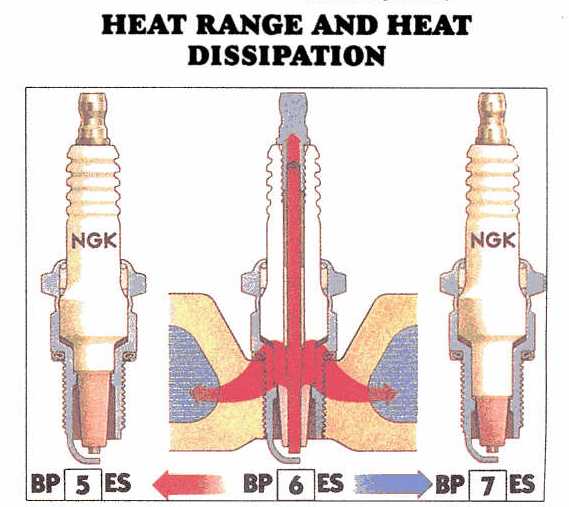
Also the whole "heat range" nomenclature is a bit misleading. What is really going on is the hotter plugs have more contact area with the combustion gases, therby having a higher heat transfer rate, whereas colder plugs have less material standing out in the chamber so they dont heat up as quickly. Heres a picture to illistrate the point. Notice the great area exposed to gas of the "hot" plug.
Feb 23, 2012 | 11:15 PM
#28

Registered User
Joined: Feb 2012
Posts: 10
Likes: 0
From: Springfield, TN
What fuel and induction will be used? I am running a super mag 3 on my turbo motor, a sprint mag should work for longer distance driving, I have not tried it yet but it is on the table. I am running .016" gap, mechanical alky injection, and 50+ lbs of boost with 29-33* timing. the misfires will not hurt, the backfires get ugly.
Feb 24, 2012 | 06:46 AM
#29

Thread Starter
TECH Resident
Joined: Dec 2006
Posts: 870
Likes: 0
From: Enid, OK
91 octane for everyday driving and race gas if I feel like I need to see what it can really do. There is no E85 in this area.
The general consensus is that coil near plug will do just fine and there is no real benefit to a distributor and external coil for boosted applications?
The general consensus is that coil near plug will do just fine and there is no real benefit to a distributor and external coil for boosted applications?

Thread
Thread Starter
Forum
Replies
Last Post
FlowmasterMufflers
Ford Engine & Exhaust Performance
1
Nov 24, 2015 01:00 PM
lxcoupe
INTERNAL ENGINE MODIFICATIONS
4
Sep 11, 2015 03:17 PM
SWINGRRRR
GMT 800 & Older GM General Discussion
5
Sep 3, 2015 07:49 PM
