


Cam for 97 Tahoe
 Dec 6, 2006 | 08:25 PM
#1

 Cam for 97 Tahoe
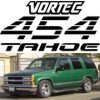
Hey guys. I snagged up a 97 tahoe with 90k miles for 3500, mint condition. A lady's husband died... But yeah, I was wondering what kind of cam to put in it for a little help offroad since it's a 4x4. I was lookin at the crane cams CompuCams CRN-104224. It's computer compatable and is 214/220 .452/,465. What do you guys think about this? I know Nelson tunes for the GenIII motors, but who would be able to tune for the Vortec350?
 Dec 7, 2006 | 01:47 AM
#4

Thanks!
Nelson can tune the old Vortecs.
Stock Vortec heads only support .450" of valve lift. To support more you need machining done to the seats to accept different springs. (Really with all the choices in available performance Vortec heads now there is much point to modding a set of stockers unless budget is seriously limited.)
Classic Small Block Vortec block are factory roller and have 1-piece rear main seals. This means that the bolt circles for both the cam and the crank are smaller than they are on non-roller cam and/or two-piece seal blocks. Make sure you get a cam compatible with a "factory roller" block. The are easily indentified by their stepped drive snout. The step is for the retainer thrust plate.
If you do change the cam it's worth it to upgrade to a roller timing set. Forget all the aftermarket ones - they do not work on this engine due to the timing reluctor on the crank. GM makes a heavy-duty single-roller chain set that works well and is made well.
Your block has 2-bolt mains. (This is irrelevant but I still feel compelled to mention it.)
Buy a new timing conver. The factory one comes with a bead of single-use sealant pre-installed. Removing the cover destroys the seal usually and the bottom of the cover is hard not to crack in the arch area. Get a pan gasket. You will have to drop the pan to get the timing cover off. Get a set of new GM intake manifold gaskets. DO NOT but the fel-pro or whatever aftermarket "compatible" gaskets available at parts shops. These are all reverse-engineered from the original flawed-engineering OEM gaskets. The new GM design is superior and corrects every previous failure point. Get a new distributor gasket. It's just a little paper o-ring. With that many mile you may need a new distributor gear. Again - forget the aftermarket ones - they do not fit the proprietary shaft size. Line up the engine to TDC before pulling the distibutor, take the cap off, and mark the rotor. It is CRITICAL that the distributor be re-installed in exactly the orientation it came out or you will get a P1345 code. While you're at it you might as well upgrade to the Multec-II retrofit injection spider. This eliminates the crappy and problematic poppet valves used in the original fuel injection design.
You can do all this stuff but I am telling you it's a hell of a lot of work to change a cam in this engine. The valves start to float with the stock springs at only 4800RPM, so keep that in mind as yet another limitation in trying to buid power on stock heads. You can't even put 1.6:1 rocker arms on them without enlarging the pushrod bores. You can't upgrade the springs much without the rockers studs pulling themselves out - they're just pressed in.
It's my personal opinion that a cam-swap isn't worth it unless you've got upgraded heads in the mix with it. There aren't many people still modding the old Vortecs any more, but do it right and they hold up to a LOT more abuse than a Gen-III with all its missing head bolts and tiny ring lands.
Nelson can tune the old Vortecs.
Stock Vortec heads only support .450" of valve lift. To support more you need machining done to the seats to accept different springs. (Really with all the choices in available performance Vortec heads now there is much point to modding a set of stockers unless budget is seriously limited.)
Classic Small Block Vortec block are factory roller and have 1-piece rear main seals. This means that the bolt circles for both the cam and the crank are smaller than they are on non-roller cam and/or two-piece seal blocks. Make sure you get a cam compatible with a "factory roller" block. The are easily indentified by their stepped drive snout. The step is for the retainer thrust plate.
If you do change the cam it's worth it to upgrade to a roller timing set. Forget all the aftermarket ones - they do not work on this engine due to the timing reluctor on the crank. GM makes a heavy-duty single-roller chain set that works well and is made well.
Your block has 2-bolt mains. (This is irrelevant but I still feel compelled to mention it.)
Buy a new timing conver. The factory one comes with a bead of single-use sealant pre-installed. Removing the cover destroys the seal usually and the bottom of the cover is hard not to crack in the arch area. Get a pan gasket. You will have to drop the pan to get the timing cover off. Get a set of new GM intake manifold gaskets. DO NOT but the fel-pro or whatever aftermarket "compatible" gaskets available at parts shops. These are all reverse-engineered from the original flawed-engineering OEM gaskets. The new GM design is superior and corrects every previous failure point. Get a new distributor gasket. It's just a little paper o-ring. With that many mile you may need a new distributor gear. Again - forget the aftermarket ones - they do not fit the proprietary shaft size. Line up the engine to TDC before pulling the distibutor, take the cap off, and mark the rotor. It is CRITICAL that the distributor be re-installed in exactly the orientation it came out or you will get a P1345 code. While you're at it you might as well upgrade to the Multec-II retrofit injection spider. This eliminates the crappy and problematic poppet valves used in the original fuel injection design.
You can do all this stuff but I am telling you it's a hell of a lot of work to change a cam in this engine. The valves start to float with the stock springs at only 4800RPM, so keep that in mind as yet another limitation in trying to buid power on stock heads. You can't even put 1.6:1 rocker arms on them without enlarging the pushrod bores. You can't upgrade the springs much without the rockers studs pulling themselves out - they're just pressed in.
It's my personal opinion that a cam-swap isn't worth it unless you've got upgraded heads in the mix with it. There aren't many people still modding the old Vortecs any more, but do it right and they hold up to a LOT more abuse than a Gen-III with all its missing head bolts and tiny ring lands.
Dec 7, 2006 | 04:25 AM
#5

TECH Veteran
Joined: Mar 2004
Posts: 4,632
Likes: 2
From: Sun Diego
See? Told ya. Sounds like knowledge talking there, borne from experience.
I swear one of these days I'm going to drive up to Riverside County and find out what 'a LOT more abuse' feels like from the passenger seat....
I swear one of these days I'm going to drive up to Riverside County and find out what 'a LOT more abuse' feels like from the passenger seat....
Dec 7, 2006 | 07:49 AM
#6
Damn son...
Can James B be a moderator? He's got the SBC Vortec on point!
Thanks for the info! Perhaps it would be best to just leave it stock...I'll just buy a wench!
An admin needs to take what he just said and make it into a stick for all those who still need info on the vortec motors. Good job, bro!
Can James B be a moderator? He's got the SBC Vortec on point!
Thanks for the info! Perhaps it would be best to just leave it stock...I'll just buy a wench!
An admin needs to take what he just said and make it into a stick for all those who still need info on the vortec motors. Good job, bro!

Trending Topics
Dec 7, 2006 | 02:08 PM
#8
Head swaps on Vortec SBC ("Gen-Ie") engines can be a little bit tricky because there are so many differences between them and the old SBC. The intake ports have raised runners and must be mated to a Vortec intake manifold with the same port pattern. The old intake manifold pattern has 12 bolts the thread in at an angle perpendicular to the ports. The Vortec maniolds eliminate the four middle bolts and relocate and re-orient the 8 outside ones. Vortec intake manifold bolts go straight down, not at an angle. Only 11 foot pounds are used to tighten these bolts. (Overtorque is the most common cause of gasket failure.)
The spark plugs on Vortec heads use a tapered seat and not an O-Ring. Many of the aftermarket heads use o-ring plugs, so make sure you've got what you need for new heads. Head gaskets for Vortec heads are different from classic SBC. Vortec heads have valve reliefs cast into them that make the combustion chamber actually larger than the cylinder bore. The gasket cannot extend into the chamber beyond this relief or the edges will heat up and cause detonation. Cometic multi-layer steel Viton-coated gaskets work best in my opinion. The head bolts for Gen-1e SBC are the same as they are for classic SBC. You have the short ones along the bottom edge, the medium size ones at the very front and rear, and the tall ones in the center and along the top. All extend into water jacket except for the the top three tall ones. Use non-hardening thread sealer for bolts, semi-hardening form-a-gasket/thread sealer for studs.
Vortec heads use center-bolt rocker covers. Centerbolt heads require the use of narrow-bodied rocker arms. The stock rockers are self-aligning, meaning the valve stem sits in a depression stamped into the rocker that keeps the rocker aligned with the valve stem. This, in turn, keep the pushrod in-line as well. Either use self-aligning rockers and no pushrod guideplates OR use non-self-aligning rockers and guideplates. If you decide to use guideplates in your modified stock or aftermarket Vortec heads you will also need to buy new pushrods. The stock pushrods are mild steel and will not hold up to contact with guideplates. The pushrods need to be hardened and I believe the stock length is 7.195".
When buying aftermarket Vortec heads there is also a choice in exhaust port configuration. The stock exhaust ports are similar to classic SBC and have the bolt holes in line with the centers of the ports. The Gen-Ie uses hydraulic roller lifters. It's best to get a cam that will give you desired lift with 1.5:1 ratio rockers rather than getting more lift and duration from a smaller cam with 1.6:1 rockers. The higher ratio rockers are harder for the lifters to push, so more RPM with less valvetrain noise can be obtained with 1.5:1 rockers. (Of course the PCM limitation of 5800 maximum RPM is a lower litmitation than the lifters.)
Many of the large-port heads have D-shaped ports like the LT4. These are taller and have an arched roof that forms the "D". The bolt holes are more in-line with the lower portion of the ports.
Do not attempt to reuse the rocker cover gaskets with a head swap. Even though they may appear to be supple, once they conform to the head they were used with they will leak if moved to anything else.
A few more things I didn't mention about doing a cam-swap in-truck: The Radiator and A/C condensor have to come out. The front grille has to come off obviously. Water pump, fan and upper fan shroud, alternator, a/c compressor. For the compressor, just unbolt it and roll the whole thing over to the passenger side fender. It winds up upside-down where it can be bungee-corded out of the way. You can use bungee cords to hold the harness out of the way to get the manifold in and out too. The backet the power steering pump is on can be taken off and parked off to the side without disconnecting power steering. There are two bolts under and behind that have to be loosened for this braket to move - get under with a flashlight and you'll see them. If you've got 4WD there are shields in the way you have to work around, or take off. When you disconnect the heater supply from the quick-disconnect fitting it may break. The QD fittings are available at every auto-parts store. The stock one is made of VERY brittle pot metal. If it still has the factory QD fitting in the manifold you should replace it anyway. Do not attempt to change that fitting with the manifold in the truck - they usually break right off as soon as you try to turn them, then you have to dig the threads out of the manifold. If you are doing heads and still have stock manifolds, pick up a set of donut gaskets for the downpipes. Old ones will almost always leak if they go back in. A little trick you can use to get the coolant level low enough not to flood the cylinders when you pull the heads is to remove one of the lower head bolts after the exahust manifold are off and stick a piece of plastic tubing down in there to siphon off the coolant. Also, if the water pump is the original, get a new one. These are cheap and only last 80-90K anyway.
There really are too many details to a top end tear-down and rebuild to try to list them all. It's always best to have someone with experience on-hand or at least on standby. Even an old-school SBC guy will be able to help.
Good luck.
The spark plugs on Vortec heads use a tapered seat and not an O-Ring. Many of the aftermarket heads use o-ring plugs, so make sure you've got what you need for new heads. Head gaskets for Vortec heads are different from classic SBC. Vortec heads have valve reliefs cast into them that make the combustion chamber actually larger than the cylinder bore. The gasket cannot extend into the chamber beyond this relief or the edges will heat up and cause detonation. Cometic multi-layer steel Viton-coated gaskets work best in my opinion. The head bolts for Gen-1e SBC are the same as they are for classic SBC. You have the short ones along the bottom edge, the medium size ones at the very front and rear, and the tall ones in the center and along the top. All extend into water jacket except for the the top three tall ones. Use non-hardening thread sealer for bolts, semi-hardening form-a-gasket/thread sealer for studs.
Vortec heads use center-bolt rocker covers. Centerbolt heads require the use of narrow-bodied rocker arms. The stock rockers are self-aligning, meaning the valve stem sits in a depression stamped into the rocker that keeps the rocker aligned with the valve stem. This, in turn, keep the pushrod in-line as well. Either use self-aligning rockers and no pushrod guideplates OR use non-self-aligning rockers and guideplates. If you decide to use guideplates in your modified stock or aftermarket Vortec heads you will also need to buy new pushrods. The stock pushrods are mild steel and will not hold up to contact with guideplates. The pushrods need to be hardened and I believe the stock length is 7.195".
When buying aftermarket Vortec heads there is also a choice in exhaust port configuration. The stock exhaust ports are similar to classic SBC and have the bolt holes in line with the centers of the ports. The Gen-Ie uses hydraulic roller lifters. It's best to get a cam that will give you desired lift with 1.5:1 ratio rockers rather than getting more lift and duration from a smaller cam with 1.6:1 rockers. The higher ratio rockers are harder for the lifters to push, so more RPM with less valvetrain noise can be obtained with 1.5:1 rockers. (Of course the PCM limitation of 5800 maximum RPM is a lower litmitation than the lifters.)
Many of the large-port heads have D-shaped ports like the LT4. These are taller and have an arched roof that forms the "D". The bolt holes are more in-line with the lower portion of the ports.
Do not attempt to reuse the rocker cover gaskets with a head swap. Even though they may appear to be supple, once they conform to the head they were used with they will leak if moved to anything else.
A few more things I didn't mention about doing a cam-swap in-truck: The Radiator and A/C condensor have to come out. The front grille has to come off obviously. Water pump, fan and upper fan shroud, alternator, a/c compressor. For the compressor, just unbolt it and roll the whole thing over to the passenger side fender. It winds up upside-down where it can be bungee-corded out of the way. You can use bungee cords to hold the harness out of the way to get the manifold in and out too. The backet the power steering pump is on can be taken off and parked off to the side without disconnecting power steering. There are two bolts under and behind that have to be loosened for this braket to move - get under with a flashlight and you'll see them. If you've got 4WD there are shields in the way you have to work around, or take off. When you disconnect the heater supply from the quick-disconnect fitting it may break. The QD fittings are available at every auto-parts store. The stock one is made of VERY brittle pot metal. If it still has the factory QD fitting in the manifold you should replace it anyway. Do not attempt to change that fitting with the manifold in the truck - they usually break right off as soon as you try to turn them, then you have to dig the threads out of the manifold. If you are doing heads and still have stock manifolds, pick up a set of donut gaskets for the downpipes. Old ones will almost always leak if they go back in. A little trick you can use to get the coolant level low enough not to flood the cylinders when you pull the heads is to remove one of the lower head bolts after the exahust manifold are off and stick a piece of plastic tubing down in there to siphon off the coolant. Also, if the water pump is the original, get a new one. These are cheap and only last 80-90K anyway.
There really are too many details to a top end tear-down and rebuild to try to list them all. It's always best to have someone with experience on-hand or at least on standby. Even an old-school SBC guy will be able to help.
Good luck.

Thread
Thread Starter
Forum
Replies
Last Post
Breitling
GM Engine & Exhaust Performance
3
Jul 6, 2015 06:39 PM
