


Towing Questions
 Mar 31, 2015 | 09:17 AM
#1

Thread Starter
Teching In
Joined: Mar 2015
Posts: 37
Likes: 0
 Towing Questions
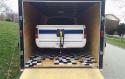
I have recently bought a 26' enclosed trailer to tow my 2400lb race car to the track. I am towing with a 2003 4X4 Suburban with a 5.3 and 4L60E, everything is stock. 185K on the clock. The last oil change showed a little milkiness on the inside of the oil fill cap and neck, but overall the oil looked fine. Given the issues with the heads, I am putting together a 6.0 that I got cheap to replace it before the water issue gets worse or strands me on the way to the race track!
I have always towed in OD with the tow/haul mode turned on. What are your thoughts vs. towing in Drive? I have a big cooler to put on and some air bags for the springs to help carry that big trailer.
Interested to hear your thoughts!
I have always towed in OD with the tow/haul mode turned on. What are your thoughts vs. towing in Drive? I have a big cooler to put on and some air bags for the springs to help carry that big trailer.
Interested to hear your thoughts!
Mar 31, 2015 | 10:54 PM
#2

Teching In
Joined: Nov 2012
Posts: 35
Likes: 0
From: Ontario, Canada
Suburbans make great tow rigs because the long wheelbase improves stability and comfort.
I've always found towing heavier trailers is better in drive than overdrive. Unless towing on pretty much flat terrain, it's hard to keep the convertor locked and/or the trans from downshifting. Leaving it in drive puts the engine in an rpm range where it's making more torque so the transmission is not hunting, runs cooler, and believe it or not in my experience, the truck gets better fuel economy. I find trying to maintain speed in OD requires more throttle position than in drive.
You may find a 6.0 has enough power for OD though...
More importantly, use a proper hitch with load levelling bars and anti-sway. Towing with a 1500 can be dangerous without the proper equipment. I speak from experience. I got into some uncontrollable sway and crashed my truck and rv trailer last fall. It was a humbling experience collecting my load leveling and anti-sway kit from the wreckage after I didn't bother to spend the extra 10 minutes setting it up because it was "just a short trip". It would have saved my truck and trailer.
I've always found towing heavier trailers is better in drive than overdrive. Unless towing on pretty much flat terrain, it's hard to keep the convertor locked and/or the trans from downshifting. Leaving it in drive puts the engine in an rpm range where it's making more torque so the transmission is not hunting, runs cooler, and believe it or not in my experience, the truck gets better fuel economy. I find trying to maintain speed in OD requires more throttle position than in drive.
You may find a 6.0 has enough power for OD though...
More importantly, use a proper hitch with load levelling bars and anti-sway. Towing with a 1500 can be dangerous without the proper equipment. I speak from experience. I got into some uncontrollable sway and crashed my truck and rv trailer last fall. It was a humbling experience collecting my load leveling and anti-sway kit from the wreckage after I didn't bother to spend the extra 10 minutes setting it up because it was "just a short trip". It would have saved my truck and trailer.
Apr 1, 2015 | 07:57 AM
#3
Thread Starter
Teching In
Joined: Mar 2015
Posts: 37
Likes: 0
Wow! I am so sorry to hear of your experiences! Thank you for sharing it, that took courage!
I am working on the load leveling sway stuff, I will move that way up the list.
It will be good to try Drive. I am very concerned every time it kicks down out of OD, that things are heating up. It will be nice to see how she does in Drive.
Mike
I am working on the load leveling sway stuff, I will move that way up the list.
It will be good to try Drive. I am very concerned every time it kicks down out of OD, that things are heating up. It will be nice to see how she does in Drive.
Mike
Apr 1, 2015 | 08:28 AM
#4


Joined: Jan 2006
Posts: 16,282
Likes: 438
From: Huntsville, AL
The milkiness is the fill cap is probably from the oil mixing with normal condesnation fomr water in the air and oil. The water is naturally evaporated from the oil as it heats up, but if you dont drive on extended trips often it sometimes wont have time to get rid of it all. How does the oil look when you drain it?
Apr 1, 2015 | 08:55 AM
#5
Thread Starter
Teching In
Joined: Mar 2015
Posts: 37
Likes: 0
The oil looked fine. This concerned me as I had the same stuff happen on a '94 350 Suburban years ago. It got worse and worse and I lost a head gasket while visiting my sister, 400 miles from home! I don't want a repeat of that!
Now, the truck was getting driven, the weeks I have my girls, I drive it daily. The weeks I don't, I drive my Miata. The weeks it is the daily, it would get a 40 minute run around town dropping off at two schools and going to work. Then 15-20 minutes to get home. Not sure if that is the driver or not.
Mike
Now, the truck was getting driven, the weeks I have my girls, I drive it daily. The weeks I don't, I drive my Miata. The weeks it is the daily, it would get a 40 minute run around town dropping off at two schools and going to work. Then 15-20 minutes to get home. Not sure if that is the driver or not.
Mike
Apr 30, 2015 | 11:21 AM
#7
Thread Starter
Teching In
Joined: Mar 2015
Posts: 37
Likes: 0
So what exactly does the tow haul mode do? I notice higher shift points and terrible mileage, so I am assuming it commands higher shift points, firmer shifts and a more forgiving(less efficient) Map for the ECU. Is this correct?
Mike
Mike
Trending Topics
Apr 30, 2015 | 11:24 AM
#8
Formerly ScreamingL
Joined: Oct 2003
Posts: 3,456
Likes: 5
From: From the 412
Can't compare a motor that is known for intake gaskets leaking to a LS motor that hardly ever has head gasket issues
With said the 4l60 isn't happy with no load in that suburban no way would I try to tow that trailer with it
With said the 4l60 isn't happy with no load in that suburban no way would I try to tow that trailer with it
May 3, 2015 | 06:18 PM
#10

I tow a 7000 lb tandem axle trailer behind my yukon sometimes. I added stiffer rear springs, helwig sway bars front and back, and timbren bump stops. Can't do jack about my torsion bars but with the longer wheelbase you should be able to change out yours.
Obviously, the weight rating of the axles is still a limitation but these mods did help when towing the trailer.
Obviously, the weight rating of the axles is still a limitation but these mods did help when towing the trailer.