


2014 RAM RCSB 5.7/8spd.......project-lite DD/part time Autocrosser


 Jul 22, 2016 | 10:28 PM
#52

Ok so no idea how much caster a lowered RAM 1500 aligns at so any help there is appreciated. As for camber I'll be shooting for the -.5 to-.75 range with 1/16" toe in.
Here's a pic of the new rubber all cleaned up:
305/50VR20 rears
285/50VR20 front
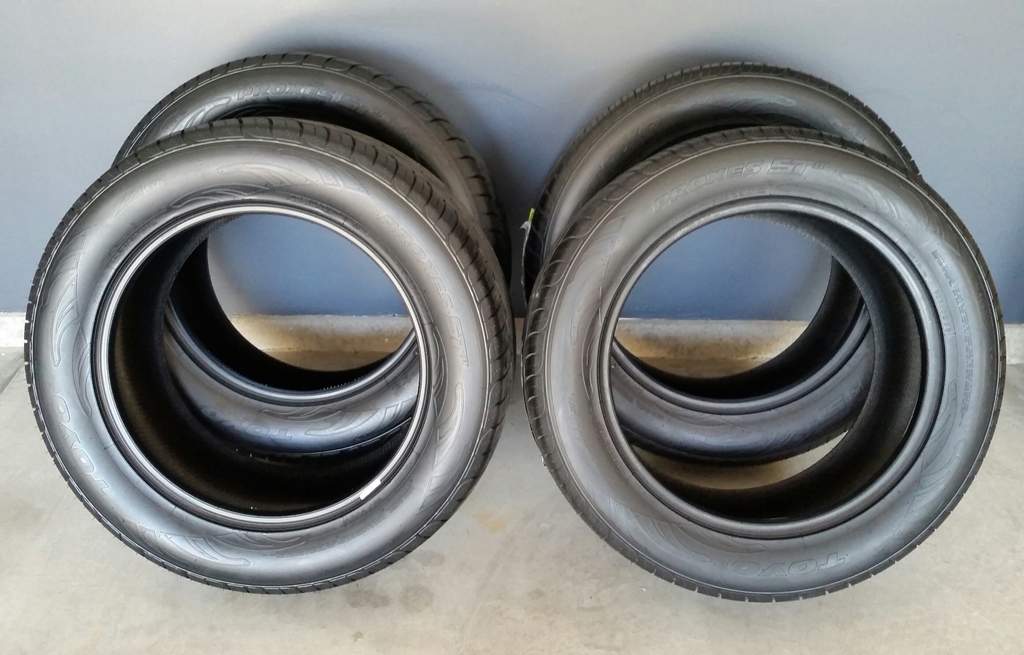
Going for a staggered slight nose down profile FTW.
Here's a pic of the new rubber all cleaned up:
305/50VR20 rears
285/50VR20 front

Going for a staggered slight nose down profile FTW.
Last edited by moregrip; Jul 23, 2016 at 02:34 PM.
Jul 22, 2016 | 10:46 PM
#53

If these numbers are correct the max negative camber they call for is -0.30 with a positive max of .50. Not sure you'd want to run it even more negative than they ask for. And toe being 0.00 to 0.20 with a medium of 0.10 to center the steering wheel. To me having 1/16" of toe in will make no difference.
 Jul 23, 2016 | 02:35 PM
#55
If these numbers are correct the max negative camber they call for is -0.30 with a positive max of .50. Not sure you'd want to run it even more negative than they ask for. And toe being 0.00 to 0.20 with a medium of 0.10 to center the steering wheel. To me having 1/16" of toe in will make no difference.


 Jul 29, 2016 | 04:48 PM
#58
The plan goes like this:
Step one: install Belltech 2/4 drop with stock shocks
Step two: get the truck aligned (looking to get about 1/16"-1/8" toe in w/ -.5 or slightly less camber)
Step three: install Toyo Proxes STII, 285/50VR20 fronts, 305/50VR20 rears on stock wheels
of note: was originally going to get the stock wheels powder coated but decided to use that money for performance upgrades vs aesthetics
Step four: Assess needs for adjustable pan-hard bar and control arms. Install whats needed.
Step five: install Hellwig 1.5" front sway bar w/F150 style shorter sway bar link and 1.25" rear sway bar with appropriate length sway bar link.
Step six: evaluate need for higher rate front coil springs and better shocks. Install whats needed.
Step seven: evaluate any exaggerated bump steer tendencies. Address as needed.
Step eight: install 4.10 rear gears w/limited slip rear diff
So that about covers my step by step plan for upgrades to the suspension and rear diff in achieving a stellar handling single cab and possibly participating in some autocross events in the future
Step one: install Belltech 2/4 drop with stock shocks
Step two: get the truck aligned (looking to get about 1/16"-1/8" toe in w/ -.5 or slightly less camber)
Step three: install Toyo Proxes STII, 285/50VR20 fronts, 305/50VR20 rears on stock wheels
of note: was originally going to get the stock wheels powder coated but decided to use that money for performance upgrades vs aesthetics
Step four: Assess needs for adjustable pan-hard bar and control arms. Install whats needed.
Step five: install Hellwig 1.5" front sway bar w/F150 style shorter sway bar link and 1.25" rear sway bar with appropriate length sway bar link.
Step six: evaluate need for higher rate front coil springs and better shocks. Install whats needed.
Step seven: evaluate any exaggerated bump steer tendencies. Address as needed.
Step eight: install 4.10 rear gears w/limited slip rear diff
So that about covers my step by step plan for upgrades to the suspension and rear diff in achieving a stellar handling single cab and possibly participating in some autocross events in the future
Jul 29, 2016 | 04:52 PM
#59
I've been following a thread on another forum called "Make it Handle" and have made some of my choices based the info/data contained in that thread because it is truck specific and from a respected source with knowledge on the subject far greater than mine.
I went down a slightly different path when choosing a rear sway bar - In fact, I took a sort of educated gamble that I could make something work not necessarily designed for a RAM 1500. Instead of going with the standard "off the shelf" Hellwig 7/8" or Addco 1" rear swaybar, I chose a Hellwig 1 1/4" rear bar in hopes that it better compliments the Hellwig 1 1/2" front bar. Of course the challenge will be getting it to fit and work correctly and that may ultimately prove to be a huge mistake but my intent is to let you know how it all works out whether I fail miserably or hit a home run or something in between.
So why go through the trouble to make a part fit/work that's not designed for the application I'm using it for?
Well, mainly because I think the intended application of the 1 1/4" bar while different is not so different it won't be terribly difficult to get it to work correctly; but we will see:favorites13:
But also because of this info:
"Lets get back to the main topic, HANDLING. One of the best upgrades you can do is swaybars. Swaybars, or Anti-roll bars, work by adding traction (downforce) to the outside tire. To do this, the swaybar has to take downforce away from the inside tire. So if you think about it, you can go 'too big' on the bars. If you went so stiff that the inside tire lifts off the ground, then that tire isn't helping at all. The balance between the front and rear bars is called "roll couple", and here's where a truck layout changes normal thought. In a normal performance car, with say 52% front weight and a low CG, the roll couple needs to be up around 80% (calc for this is really complex, so think of this as a comparison number), but in a truck, with 58% front weight and a higher CG, you aqctually need to move the roll couple BACK, maybe to 65%. This means that in comparison to a Camaro that would run a 1 1/4" front and a 7/8" rear, the truck would tend to 'need' a more evenly matched bar set. Say 1 1/4" front and 1 1/8" rear. Most retailers/manufacturers are missing this and selling bar sets in 'car' sizing, so be carefull.
From the set-up you have now, you can use the following rules for tuning.
A larger FRONT bar will "tighten" the chassis, making the truck tend to push, or not want to turn into a corner, also the rear of the truck will seam a bit stickier. A smaller front bar will do the opposite.
A larger REAR bar will "loosen" the chassis, the truck will turn into a corner easier, but the rear may want to slide around."
"Caster is a tricky thing. More + caster will give you added steering feel, or driver input, but, it will make it harder to turn. With modern power steering, the additional effort needed to steer is not reall noticed. The overall goal is to keep the tire contact patch as large as possible. Remember that as you turn, all sorts of forces are acting on the tires, pushing and pulling them around. As the sidewalls and tread flex, the patch gets smaller, and you loose traction. Setting up in anticipation of that flex is what were trying to do. I would be willing to give up some of the contact patch/traction when going straight, and max traction isn't needed, to gain some in a corner entry where it is needed. Stock trucks came with 1* or 1 1/2* + caster. The new Hotchkis kit will push that up to 9*+. For a "street driven" truck, I think 5* or 6* is the right range. Roll center hieght is a toughr goal to hit. Lets think about what is "reasonable" to acheive. It would be awsome to set the RC at the same height as the spindle pin centerline, but thats not going to happen. As a general rule, "higher is better", for RC. Try to keep it above 1/2 of the spindle height. So, if the tire diameter is 27", spindle height will be around 13", try to keep your RC above 6 1/2". This means drop spindles in favor of springs. Try to keep the swaybars close in size. 1 1/4" front with 1 1/8" rear is good for more streetable trucks, 1 1/2" front with 1 1/4" rear for more aggressive handling. - Remember that increasing caster will raise the pivit point ot the outer Tie Rod End, and could create additional bumpsteer, which will ned to be adressed in your design calcs."
I went down a slightly different path when choosing a rear sway bar - In fact, I took a sort of educated gamble that I could make something work not necessarily designed for a RAM 1500. Instead of going with the standard "off the shelf" Hellwig 7/8" or Addco 1" rear swaybar, I chose a Hellwig 1 1/4" rear bar in hopes that it better compliments the Hellwig 1 1/2" front bar. Of course the challenge will be getting it to fit and work correctly and that may ultimately prove to be a huge mistake but my intent is to let you know how it all works out whether I fail miserably or hit a home run or something in between.
So why go through the trouble to make a part fit/work that's not designed for the application I'm using it for?
Well, mainly because I think the intended application of the 1 1/4" bar while different is not so different it won't be terribly difficult to get it to work correctly; but we will see:favorites13:
But also because of this info:
"Lets get back to the main topic, HANDLING. One of the best upgrades you can do is swaybars. Swaybars, or Anti-roll bars, work by adding traction (downforce) to the outside tire. To do this, the swaybar has to take downforce away from the inside tire. So if you think about it, you can go 'too big' on the bars. If you went so stiff that the inside tire lifts off the ground, then that tire isn't helping at all. The balance between the front and rear bars is called "roll couple", and here's where a truck layout changes normal thought. In a normal performance car, with say 52% front weight and a low CG, the roll couple needs to be up around 80% (calc for this is really complex, so think of this as a comparison number), but in a truck, with 58% front weight and a higher CG, you aqctually need to move the roll couple BACK, maybe to 65%. This means that in comparison to a Camaro that would run a 1 1/4" front and a 7/8" rear, the truck would tend to 'need' a more evenly matched bar set. Say 1 1/4" front and 1 1/8" rear. Most retailers/manufacturers are missing this and selling bar sets in 'car' sizing, so be carefull.
From the set-up you have now, you can use the following rules for tuning.
A larger FRONT bar will "tighten" the chassis, making the truck tend to push, or not want to turn into a corner, also the rear of the truck will seam a bit stickier. A smaller front bar will do the opposite.
A larger REAR bar will "loosen" the chassis, the truck will turn into a corner easier, but the rear may want to slide around."
"Caster is a tricky thing. More + caster will give you added steering feel, or driver input, but, it will make it harder to turn. With modern power steering, the additional effort needed to steer is not reall noticed. The overall goal is to keep the tire contact patch as large as possible. Remember that as you turn, all sorts of forces are acting on the tires, pushing and pulling them around. As the sidewalls and tread flex, the patch gets smaller, and you loose traction. Setting up in anticipation of that flex is what were trying to do. I would be willing to give up some of the contact patch/traction when going straight, and max traction isn't needed, to gain some in a corner entry where it is needed. Stock trucks came with 1* or 1 1/2* + caster. The new Hotchkis kit will push that up to 9*+. For a "street driven" truck, I think 5* or 6* is the right range. Roll center hieght is a toughr goal to hit. Lets think about what is "reasonable" to acheive. It would be awsome to set the RC at the same height as the spindle pin centerline, but thats not going to happen. As a general rule, "higher is better", for RC. Try to keep it above 1/2 of the spindle height. So, if the tire diameter is 27", spindle height will be around 13", try to keep your RC above 6 1/2". This means drop spindles in favor of springs. Try to keep the swaybars close in size. 1 1/4" front with 1 1/8" rear is good for more streetable trucks, 1 1/2" front with 1 1/4" rear for more aggressive handling. - Remember that increasing caster will raise the pivit point ot the outer Tie Rod End, and could create additional bumpsteer, which will ned to be adressed in your design calcs."