


MAX RWHP on an L83 with stock internals??
 Oct 15, 2022 | 06:39 PM
#1

Thread Starter
Registered User
Joined: Oct 2022
Posts: 1
Likes: 0
 MAX RWHP on an L83 with stock internals??
Hi Guys
Ive got a 2014 sierra single cab, running the L83 with stock internals and just a DOD Delete + a stage 2 gwatney cam. Whipple 2.9, L86 throttle body, 100% methanol injection... The car runs like a dream and has hit 595whp on the dyno. I'm looking to do an upgrade on the fueling, adding a 102mm TB and lowering the pulley to a 3.5" as I'm currently running a 4".
Issue at hand is there are alot of people claiming different numbers and I do not have any definite number as to what the max HP is that the L83 with stock internals can take. I've heard from 500whp to 750whp. Just wanted to know your input to see if anyone has any idea.
Much appreciated!!
Ive got a 2014 sierra single cab, running the L83 with stock internals and just a DOD Delete + a stage 2 gwatney cam. Whipple 2.9, L86 throttle body, 100% methanol injection... The car runs like a dream and has hit 595whp on the dyno. I'm looking to do an upgrade on the fueling, adding a 102mm TB and lowering the pulley to a 3.5" as I'm currently running a 4".
Issue at hand is there are alot of people claiming different numbers and I do not have any definite number as to what the max HP is that the L83 with stock internals can take. I've heard from 500whp to 750whp. Just wanted to know your input to see if anyone has any idea.
Much appreciated!!
Oct 15, 2022 | 09:15 PM
#2

TECH Junkie


Joined: Jan 2007
Posts: 3,309
Likes: 265
From: Arlington, TX

Most I've heard is 676 if iirc. I think you're at a safe limit already if tuned well. Just bite the bullet and do the Gwatney drop ins. Jim N went to 1080ish after those in his Camaro. And btw meth for fuel isn't safe because of unequal distribution of the intake manifold. It does help cool though so you can have more timing. Just can't depend on it for fueling.
Last edited by ZO6Ted; Oct 15, 2022 at 09:24 PM. Reason: added info
Oct 15, 2022 | 10:37 PM
#3

I would like to think the GEN V stuff is stronger than the GEN IV stuff. Given that we see close to 1000 rw setups with GEN IV rods and pistons. However, this is from an ultimate strength point of view. It seems like we know where the weak points are going to be (connecting rods bending and eventually fracturing and tearing up the block or bending enough to hit something or piston cracking at the ringland or under the wrist pin area) and it seems this is no different from GEN IV to GEN V.
I would think in the automotive engineering world when they do structural analysis, they would do a safety factor of at least 2.5. So, this would mean they would theoretically design say the piston or connecting rod to accept at least 2.5 times the maximum load they think it will be subjected to. This would be like an ultimate stress type scenario, but maybe the limiting factor is fatigue, I don't know, but either way they build in some safety factor to account for all kinds of things like say a bad batch of parts (e.g., casting porosity, stress risers, etc.). I have no idea how they account for highly transient type shock loads like what you would see during detonation. Given that the small block V8 maybe the most mass-produced automotive engine I would think GM would have kept these safety factors high. Imagine if they had a typo on a drawing and made a radius too sharp which caused a stress riser and led to an early failure of some part after they had made a million of these. GM would then have to pay for all that warranty work and pulling engines and so forth.
So, with all that being said I would think you would have a pretty high degree of safety running double the power output, maybe 2.5. When you get above that any type of transient shock (detonation, like I mentioned above) is going to be a lot more critical. I think a lot of people overly freak out about running lean and ring gap will cure everything when it's not likely you would be at full power this long, unless towing up a full grade or something like that. I am more concerned about timing and avoiding detonation, although they can be dependent on each other.
I tried to ask an engineer I work with who used to work for GM and was there during the development of the GEN V stuff about what kind of safety factors and stuff they went by. He worked with castings a lot and in particular the blocks, he said one test was basically they would dip the whole engine block in liquid nitrogen before a dyno test which would introduce some pretty high stress just from the thermal expansion alone. I don't recall of anyone ever saying they were able to break a block, and the only time one does break if from a rod going through it or something like that. He did say the highest stressed areas were actually the bottom of the coolant jacket on the block. He also said he asked Jordan Lee (the chief engineer for the small block development) during the GEN V development why it was so overdesigned, especially when compared to the competition (ecoboost) and he just said well we want the engine to be "robust".
It does seem, observing the 6th gen Camaro and Corvette community, that the GEN V stuff seems like it is "weaker", especially under boost. Anecdotally seems like it is having more seals blowing out and piston cracking problems than the LS stuff.
I have been wanting to buy some factory LS and LT connecting rods and pistons and try to model them up and run some FEAs (using computer programs to find out how much a part is stressed given input loading) on them to see the difference. The biggest problem with this is finding the proper material specs, however you could still see and compare the resultant stresses though, but it would be more difficult to determine a failure point. Also without CAD models of the stuff its a huge PITA to try and model the stuff yourself and it would take forever.
I would think in the automotive engineering world when they do structural analysis, they would do a safety factor of at least 2.5. So, this would mean they would theoretically design say the piston or connecting rod to accept at least 2.5 times the maximum load they think it will be subjected to. This would be like an ultimate stress type scenario, but maybe the limiting factor is fatigue, I don't know, but either way they build in some safety factor to account for all kinds of things like say a bad batch of parts (e.g., casting porosity, stress risers, etc.). I have no idea how they account for highly transient type shock loads like what you would see during detonation. Given that the small block V8 maybe the most mass-produced automotive engine I would think GM would have kept these safety factors high. Imagine if they had a typo on a drawing and made a radius too sharp which caused a stress riser and led to an early failure of some part after they had made a million of these. GM would then have to pay for all that warranty work and pulling engines and so forth.
So, with all that being said I would think you would have a pretty high degree of safety running double the power output, maybe 2.5. When you get above that any type of transient shock (detonation, like I mentioned above) is going to be a lot more critical. I think a lot of people overly freak out about running lean and ring gap will cure everything when it's not likely you would be at full power this long, unless towing up a full grade or something like that. I am more concerned about timing and avoiding detonation, although they can be dependent on each other.
I tried to ask an engineer I work with who used to work for GM and was there during the development of the GEN V stuff about what kind of safety factors and stuff they went by. He worked with castings a lot and in particular the blocks, he said one test was basically they would dip the whole engine block in liquid nitrogen before a dyno test which would introduce some pretty high stress just from the thermal expansion alone. I don't recall of anyone ever saying they were able to break a block, and the only time one does break if from a rod going through it or something like that. He did say the highest stressed areas were actually the bottom of the coolant jacket on the block. He also said he asked Jordan Lee (the chief engineer for the small block development) during the GEN V development why it was so overdesigned, especially when compared to the competition (ecoboost) and he just said well we want the engine to be "robust".
It does seem, observing the 6th gen Camaro and Corvette community, that the GEN V stuff seems like it is "weaker", especially under boost. Anecdotally seems like it is having more seals blowing out and piston cracking problems than the LS stuff.
I have been wanting to buy some factory LS and LT connecting rods and pistons and try to model them up and run some FEAs (using computer programs to find out how much a part is stressed given input loading) on them to see the difference. The biggest problem with this is finding the proper material specs, however you could still see and compare the resultant stresses though, but it would be more difficult to determine a failure point. Also without CAD models of the stuff its a huge PITA to try and model the stuff yourself and it would take forever.
 May 15, 2023 | 10:21 PM
#4

Teching In
Joined: Apr 2021
Posts: 2
Likes: 0
[QUOTE=Diablo_666;5516249]Hi Guys
Ive got a 2014 sierra single cab, running the L83 with stock internals and just a DOD Delete + a stage 2 gwatney cam. Whipple 2.9, L86 throttle body, 100% methanol injection... The car runs like a dream and has hit 595whp on the dyno. I'm looking to do an upgrade on the fueling, adding a 102mm TB and lowering the pulley to a 3.5" as I'm currently running a 4".}
Hey I was wondering how much did you spend on the DOD Delete Cam Whipple and L86 throttle body?
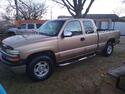
I currently have a 2015 Silverado 1500
Ive got a 2014 sierra single cab, running the L83 with stock internals and just a DOD Delete + a stage 2 gwatney cam. Whipple 2.9, L86 throttle body, 100% methanol injection... The car runs like a dream and has hit 595whp on the dyno. I'm looking to do an upgrade on the fueling, adding a 102mm TB and lowering the pulley to a 3.5" as I'm currently running a 4".}
Hey I was wondering how much did you spend on the DOD Delete Cam Whipple and L86 throttle body?
I currently have a 2015 Silverado 1500

Thread
Thread Starter
Forum
Replies
Last Post
IIGW
GM Engine & Exhaust Performance
18
Jul 19, 2021 06:19 PM