When you click on links to various merchants on this site and make a purchase, this can result in this site earning a commission. Affiliate programs and affiliations include, but are not limited to, the eBay Partner Network.
So that sounds more like rotating assembly knock noise, but I had a TSP 228/236 .635/.635 114-LSA for about 10k miles on my 2017 Camaro 6.2 LT1. The intake valve seats ended up failing enough to where #7 lost compression and started misfiring. I had to get new seats put in the heads.
TSP claims all GEN V LT1 valve seats (I believe the L86 uses the same valve seats) are supposedly "bad" from the factory and they will fail even stock and that you need to buy TSP's aftermarket castings. Obviously they have a really bad conflict of interest in stating that. I think their cams are just way to aggressive and they beat the valve seats to death.
Are you monitoring the individual misfire PIDs? or just checking for misfire codes? I think you should start with a scan tool and do a cylinder balance test, or at least start cutting off cylinders and observing the vibration and see if you can get it down to a certain cylinder. Then do a compression and leak down on that cylinder.
I'm hearing two sounds a fast constant tapping then the random louder knock. The fast tapping sounds low and the random sounds up top. Pull one plug wire then start engine... stop...then repeat... until you've done all eight one at a time. A rod will usually quieten down when the cylinder is not firing.
I would say the oil is slightly copper if at all. But I did find a couple metal flakes in the oil pan I used to catch it. So I’m guessing I’ll go ahead and pull the engine.
This will be the first motor I’ve ever pulled. So I’ll take any tips you have. I talked the the machine shop that checked my heads and ported them. I just need to completely disassemble it and that it to them to check out.
I would say the oil is slightly copper if at all. But I did find a couple metal flakes in the oil pan I used to catch it. So I’m guessing I’ll go ahead and pull the engine.
This will be the first motor I’ve ever pulled. So I’ll take any tips you have.
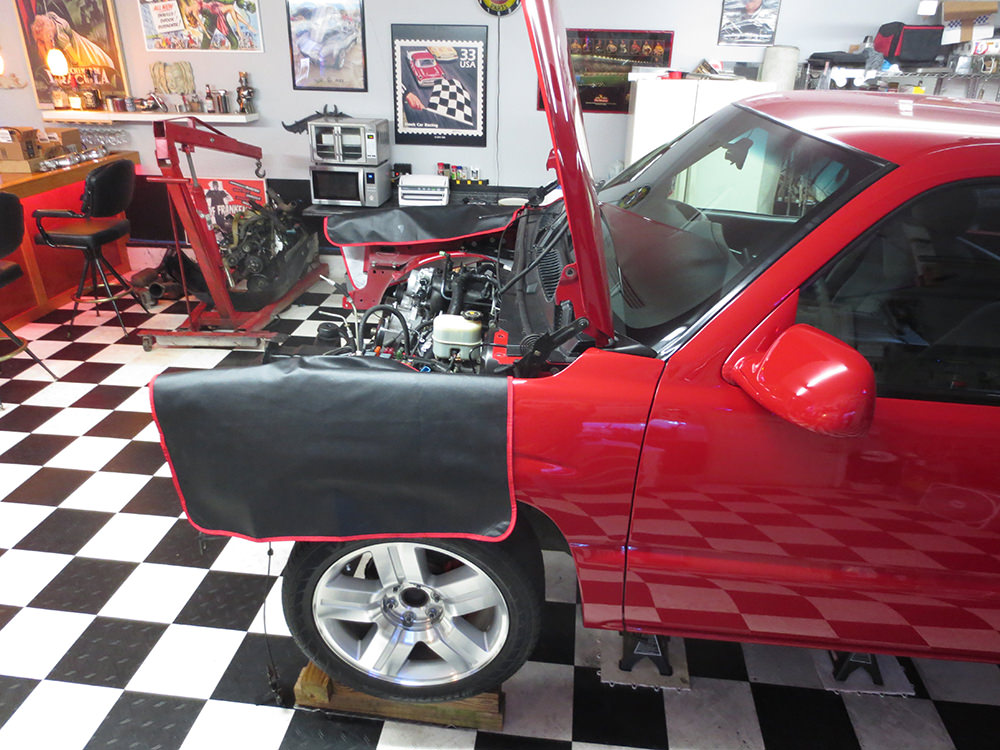
Not sure about the newer trucks but the GMT-800 trucks have an extra hole in the hood hinge. You remove the bolt on each hinge and lift the hood to the "service position" then install the bolt(s) in the other hole. This keeps you from having to remove the hood making it a one man operation (easier with two people) and eliminates the chances of scratching the hood or fenders.
Hood almost vertical in the "service position" You can see the other hole in the hood hinge area.



 Nov 4, 2021 | 06:12 PM

 Let’s play what’s that sound cammed L86