


Engine Builders I Need Help Thrust Bearing (Pics)
 Dec 23, 2013 | 02:16 PM
#1

Thread Starter
On The Tree
Joined: Dec 2010
Posts: 101
Likes: 0
 Engine Builders I Need Help Thrust Bearing (Pics)
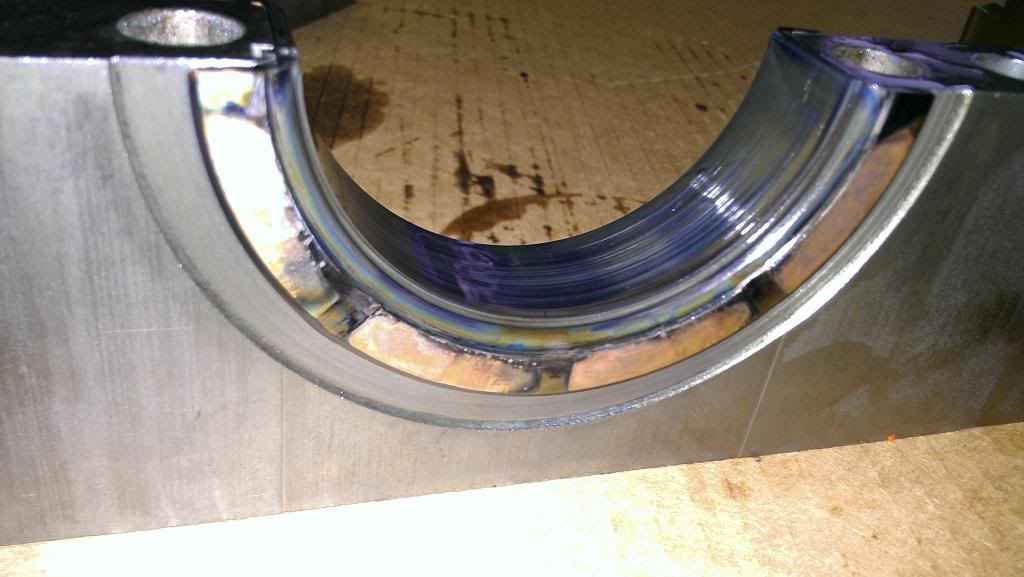
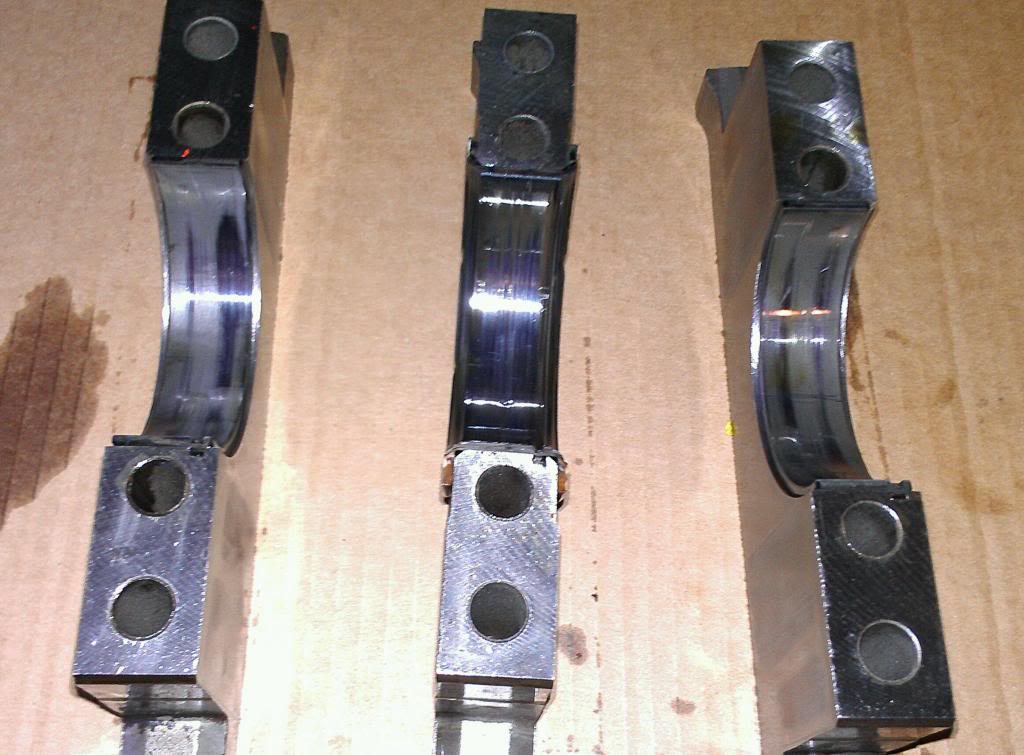
Just started my freshly rebuilt 390 and I found extremely small gold specs in the oil when I dumped the filter. Figured it was just brake in related, I replaced filter, ran 45 min, and dumped again, still seeing gold colored specs in oil. I feel like I my have caused this issue by not properly priming the system to starting. I cranked the motor over for 10-12 seconds 2 times with coils and injectors unplugged. Now I know the proper way of doing this TAKE THE DAM* Plugs out and crank until oil is coming out up to rockers. Anyhow took caps off to find this. Thrust bearing on the front facing side is wore down to the point the 3 oil slots are gone. Pleas take a look. Do I have more then pre start oiling issues??



 Dec 23, 2013 | 06:50 PM
#5

Did you set the thrust? Or just torque down the caps? What were the clearances when you assembled the bottom end? Any chance you didn't have your converter seated properly when you dropped it in?
Lots of things could have gone wrong & caused this.
Lots of things could have gone wrong & caused this.
Dec 23, 2013 | 07:27 PM
#6
Thread Starter
On The Tree
Joined: Dec 2010
Posts: 101
Likes: 0
I forgot to mention a possible contributing factor. I attempted to start motor with my bigger 80lbs injectors and was having fueling issues with new injector data, dumping fuel to the point of soaking the plugs for a no start. I would have to pull plugs and dry them off. I tried one more time with them scaled back and same issue, dumping fuel. I replaced stock injectors and tune and fired it up for first run. Could washing the block out with excess fuel cause this. Converter is spaced 1/8" from flex plate plus the majority of the ware is on the forward facing portion of the thrust bearing.
I have all my build specs, give me some time to find it and I will post.
Thank you all for giving me some input, much appreciated.
I have all my build specs, give me some time to find it and I will post.
Thank you all for giving me some input, much appreciated.


Trending Topics
Dec 23, 2013 | 09:48 PM
#8


BTW, the proper way to prime an oil system is to use a pre luber type tool to pump fresh oil through the oiling system Before cranking it.
Cranking a bone dry motor can take up to a full minute to get oil all the way through the motor's oiling system and back down to the pan. At a start up Idle, its around 30 seconds.
Over fueling won't help either as it can mix with the oil and wash away the assembly lube.
Personally, I like to start a Fresh engine and get it up to running temp and then shut it down and change the oil and filter before driving it. Also because some assembly lubes can clog the filter and starve the engine for oil. When the oil filter clogs and runs through the oil filter bypass your just cycling the oil without filtering it.
Being as the damage was on the front side you might want to talk to your builder/ machinist.
Cranking a bone dry motor can take up to a full minute to get oil all the way through the motor's oiling system and back down to the pan. At a start up Idle, its around 30 seconds.
Over fueling won't help either as it can mix with the oil and wash away the assembly lube.
Personally, I like to start a Fresh engine and get it up to running temp and then shut it down and change the oil and filter before driving it. Also because some assembly lubes can clog the filter and starve the engine for oil. When the oil filter clogs and runs through the oil filter bypass your just cycling the oil without filtering it.
Being as the damage was on the front side you might want to talk to your builder/ machinist.
Dec 24, 2013 | 10:17 AM
#9

What does the bearing look like that is in the block? Who did the assembly, and did they check the crank endplay? As stated above did they seat the thrust bearing properly? I would take the thrust bearing cap with the bearing still installed in it and place it on the center journal. You should be able to fit a .004 feeler gauge between the side of the bearing and the machined area on the crank. I would assume you would have a much larger clearance since yours is worn so bad. After measuring the end play with a feeler gauge I would take the bearing off and read the back of it. You might even want to intall the crank in the block again, and torque down the caps to check the end play before you remove the bearing. Make sure there is nothing on the back of the bearing like .010 or anything that indicates that it has an oversized flange unless the machining process called for it.
When you removed the engine, was there room for your torque convert to slide back, or was it pushing against the crankshaft?
When you removed the engine, was there room for your torque convert to slide back, or was it pushing against the crankshaft?
Dec 24, 2013 | 12:43 PM
#10
Thread Starter
On The Tree
Joined: Dec 2010
Posts: 101
Likes: 0
Thank you all for the tips. I will take a look at the clearance between the thrust and crank for starters.
I will also talk with my engine builder and see if the thrust bearing was set properly during build. It's possible it was not from the ware on the front side. He is a big time engine builder however, This was one of his first LS blocks. World champion marine engine builder so he knows what he's doing with the boosted big blocks.
Clearance between converter and flex was 1/8th".
I'm also contemplating taking motor to a high performance ls only guru and having them go through it just to make sure it is 100% good to go.
There is nothing more frustrating then making it to this point and taking a large step backwards!!!
I will also talk with my engine builder and see if the thrust bearing was set properly during build. It's possible it was not from the ware on the front side. He is a big time engine builder however, This was one of his first LS blocks. World champion marine engine builder so he knows what he's doing with the boosted big blocks.
Clearance between converter and flex was 1/8th".
I'm also contemplating taking motor to a high performance ls only guru and having them go through it just to make sure it is 100% good to go.
There is nothing more frustrating then making it to this point and taking a large step backwards!!!