


The "Why" on converter clearance
 Jan 21, 2015 | 09:24 AM
#1

 The "Why" on converter clearance
One of the most common questions we get is about converter spacing/clearance, not well understood and can be confusing. I know a lot of you guys get the purpose and how important it is. But if we can prevent one guy from blowing up his pump we made progress.
I wanted to try and explain why we want 1/8” spacing and hope that will help you guys understand it better when you are installing a converter. When installing any converter, measuring and setting the proper converter clearance is critical for proper operation of the converter and transmission. It can get a little confusing and reading on the internet all you see is you want an 1/8” clearance. What does this mean and why does it matter? The goal is to have 1/8” space between the converter hub and the transmission stator support once you pull the converter forward and bolt it up. You do not want to bottom the converter out or even worse, have negative clearance forcing it into the stator support or pump gears on start up, that will damage your converter and transmission. The converter does move in and out of the transmission, which is why the 1/8” is there to ensure the converter can move some and not bottom out in the transmission. But you do not want to have too much spacing where the converter might pull out of the pump gears and cause a major failure. I am sure you have read a thread about a 4L60 pump rotor breaking costing lots of money. Probably happened because spacing was over the 1/8” and the converter pulled out of the rotor. This is why you might need shims if the spacing is over an 1/8”, to move the converter a little closer to the trans for proper pump gear engagement. Another interesting factoid - That is why the flexplate is called a flexplate, it will flex absorbing the thrust from the converter moving in and out of the transmission.
Hopefully my rambling made sense.... Any questions just ask.
Chris
I wanted to try and explain why we want 1/8” spacing and hope that will help you guys understand it better when you are installing a converter. When installing any converter, measuring and setting the proper converter clearance is critical for proper operation of the converter and transmission. It can get a little confusing and reading on the internet all you see is you want an 1/8” clearance. What does this mean and why does it matter? The goal is to have 1/8” space between the converter hub and the transmission stator support once you pull the converter forward and bolt it up. You do not want to bottom the converter out or even worse, have negative clearance forcing it into the stator support or pump gears on start up, that will damage your converter and transmission. The converter does move in and out of the transmission, which is why the 1/8” is there to ensure the converter can move some and not bottom out in the transmission. But you do not want to have too much spacing where the converter might pull out of the pump gears and cause a major failure. I am sure you have read a thread about a 4L60 pump rotor breaking costing lots of money. Probably happened because spacing was over the 1/8” and the converter pulled out of the rotor. This is why you might need shims if the spacing is over an 1/8”, to move the converter a little closer to the trans for proper pump gear engagement. Another interesting factoid - That is why the flexplate is called a flexplate, it will flex absorbing the thrust from the converter moving in and out of the transmission.
Hopefully my rambling made sense.... Any questions just ask.
Chris


 Jan 21, 2015 | 12:54 PM
#4

Im an idiot when it comes to trannys so here i go. Is this why they say to aim for an 1/8" between the converter and the flywheel before its bolted up? The stator and hub are behind the converter when mounted, how would one go about measuring that?
Jan 21, 2015 | 12:59 PM
#5
Yup thats why. You measure the converter to flex plate clearance when the converter is pushed all the way in. In turn you are measuring the clearance between the converter and pump when it is bolted to the flex plate.
Jan 22, 2015 | 10:33 AM
#6
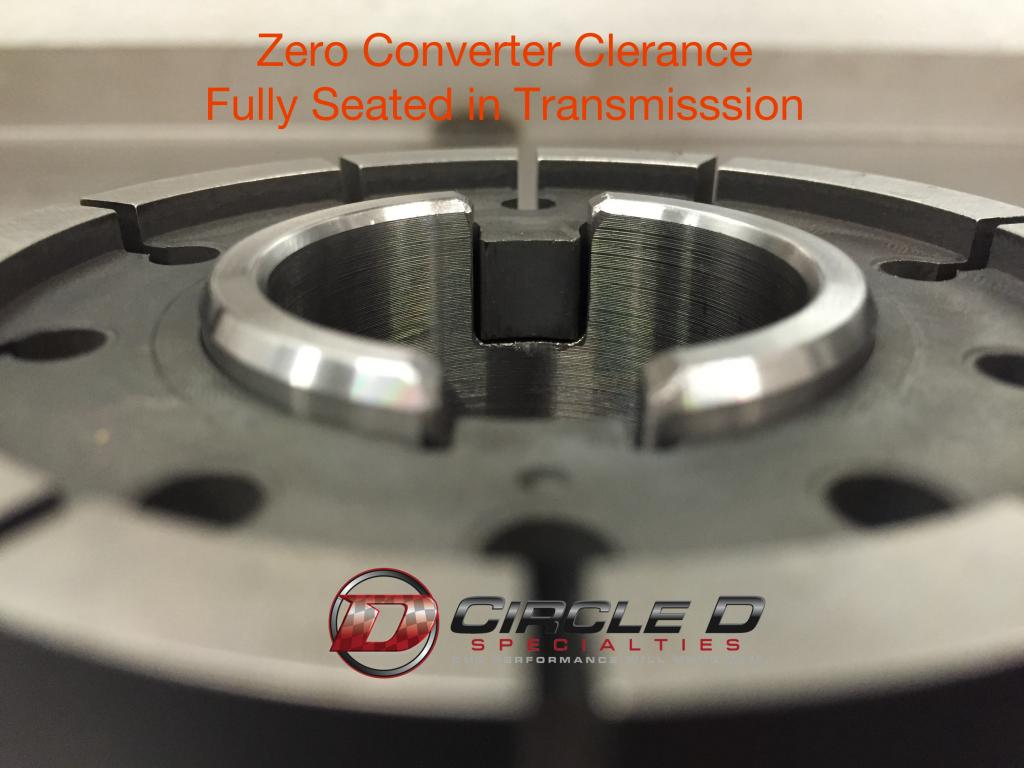
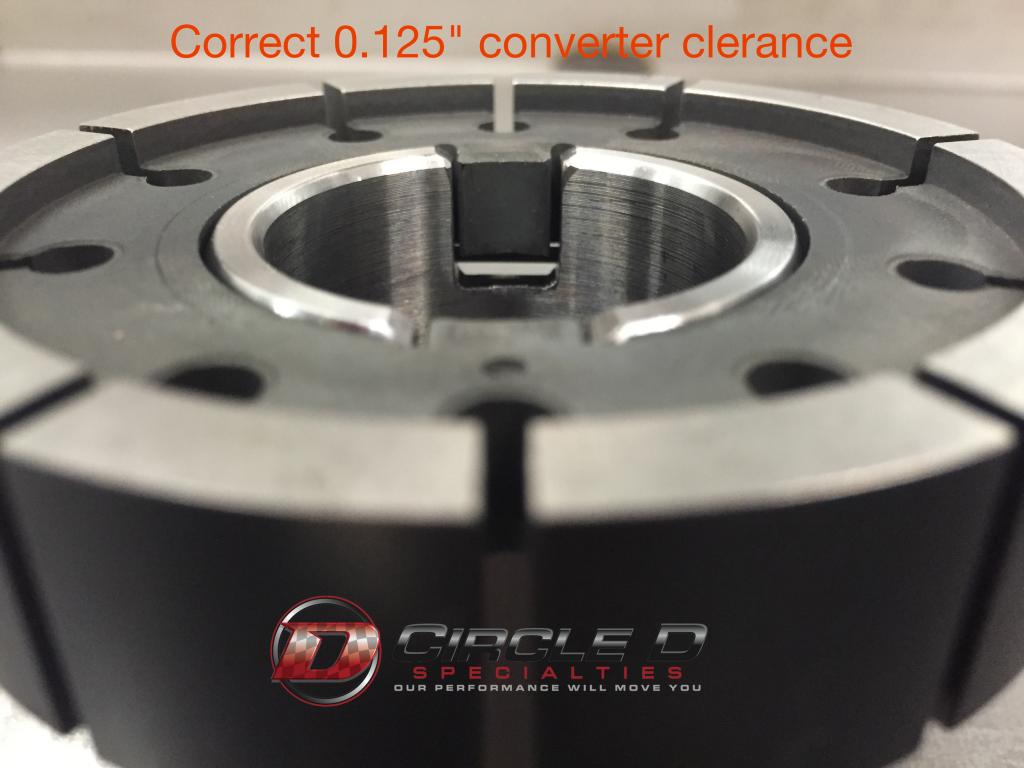
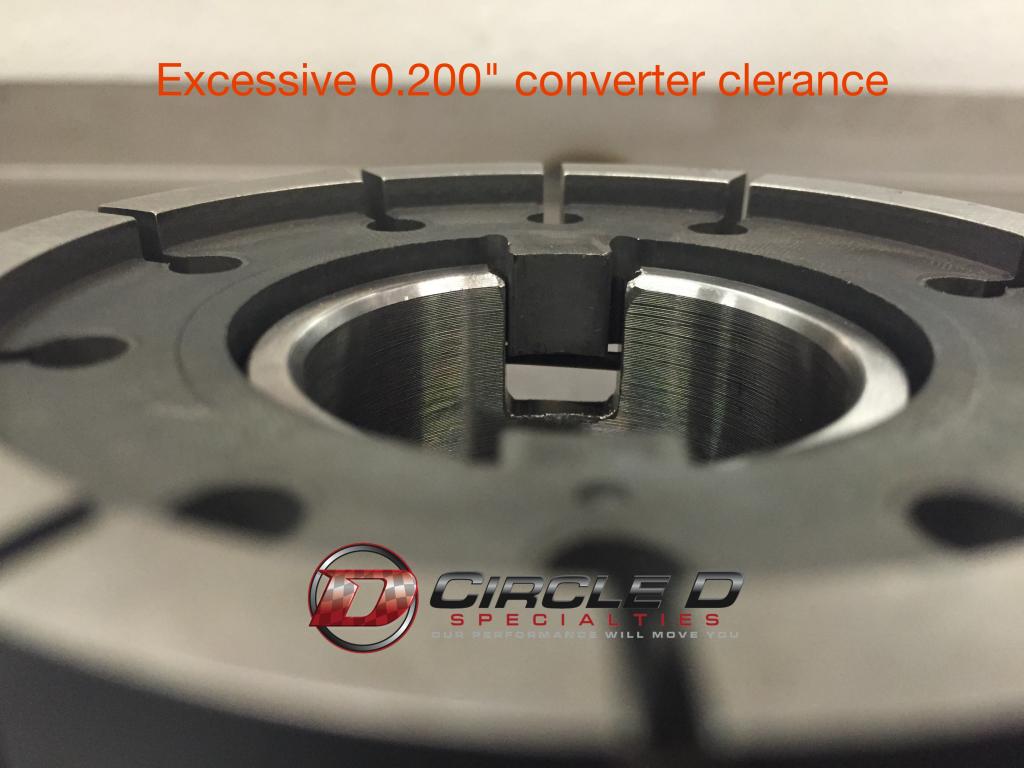
Here are some pics to better describe the "Why" on converter spacing with some close up pics of converter hub installed in a pump rotor. - 4L60 LS setup. First is a converter hub seated all the way, zero clearance. Second is with the correct .125" spacing. Gives it room to move in and out of the trans some, but with good engagement. Third is with .200 spacing, looks like it can come out with some movement - not good. Hope this gives you a better idea of how important this is.
Chris
Chris


Trending Topics
Jan 25, 2015 | 05:33 AM
#8

Very cool info. I have always eye balled that there was a small gap between the converter and flex plate but honestly didn't know how much or why. I will make sure to start measuring for the 1/8th of an inch to be safe.
The pictures really help drive home what is going on inside too.
The pictures really help drive home what is going on inside too.
Jan 30, 2015 | 11:30 PM
#9

You could use an 1/8th drill bit to measure for proper clearance...... That's the method that I use and prefer to use. Install the converter the. Stick the bit between the flexplate and converter bolt boss and begin measuring
 hope that helps