


Another catch can question... slight oil smell at idle
 Apr 12, 2016 | 11:32 PM
#22


A vacuum pump will evacuate the crankcase and negative pressure in the crankcase helps the rings seal. I have always thought that having a vacuum pump would make oil mist collection more efficient, but I can't quite envision a system designed for maximum oil collection. Maybe the exhaust from a vacuum pump will improve the action of a centrifugal oil separator.
It would be nice to have an oil separating system that is efficient enough to allow you to send the fumes back to the intake, 100% oil free. You would never have the smell.
Apr 12, 2016 | 11:41 PM
#23

The pressure doesn't need any help to get out of the crankcase. The only reason to route fumes to the intake is for pollution control, crankcase fumes are full of unburnt fuel.
So to confirm, check valves are only necessary on MAF setups correct?
 Apr 12, 2016 | 11:54 PM
#26
Now that's an idea... any way a restrictor could hurt? Reading the forums I don't see a lot of mention on turbo restrictors, I see them mentioned quite a bit in the import world though.
Ok that makes sense. I plugged the turbo inlet elbow and I rigged up a little breather filter off a piece of 3/8" hose. I'll put some miles on this and make an assessment in a few days before considering doing 1 vented breather tank for both valve covers.
So to confirm, check valves are only necessary on MAF setups correct?
Ok that makes sense. I plugged the turbo inlet elbow and I rigged up a little breather filter off a piece of 3/8" hose. I'll put some miles on this and make an assessment in a few days before considering doing 1 vented breather tank for both valve covers.
So to confirm, check valves are only necessary on MAF setups correct?


 Apr 13, 2016 | 05:00 AM
#29

Depending on turbo they could already be restricted.
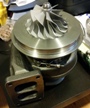
Look down the turbos oil inlet prior to installing the inlet fitting. There's should be a very small hole in the actual casting.
Now the drain needs to -10 or larger.
Simple way to build a restrictor is using nitrous jets.
Apr 13, 2016 | 05:04 AM
#30