


30 lbs?




 Sep 4, 2013 | 08:51 AM
#13
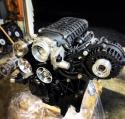

Thats basically what I was driving at. I'd take a well thought out LS engine making 15# of boost over that 351 in almost all cases. I would expect almost 700 ponies from a 6L running 15+, but I never hear of a small block ford making that kind of power. The 6.0 on the other hand... not uncommon.
Sep 4, 2013 | 01:45 PM
#14

I said I liked the look of the car. I honestly don't event stop to look at mustangs usually but this one looked pretty good. So I nicely talked to him for a short while and asked what it ran since I saw it was still ford powered. He actually told me he was strongly considering an LS swap.
But from my limited knowledge he was lying about the boost. I didn't call him out on it because I didn't know. I was going from an educated guess that so many guys run 78mm and much larger but still only run 20-25 psi at max. That is why I came here and tried to learn something or validate my incorrect thought.
But from my limited knowledge he was lying about the boost. I didn't call him out on it because I didn't know. I was going from an educated guess that so many guys run 78mm and much larger but still only run 20-25 psi at max. That is why I came here and tried to learn something or validate my incorrect thought.


 Sep 5, 2013 | 11:17 PM
#17


Joined: Jan 2006
Posts: 16,282
Likes: 438
From: Huntsville, AL
Find a guy with a big engine and small turbo, he can make 40psi pretty easy but wont make **** for power. Turbo compressor are work consuming devices, they take power to drive (same thing as your shop air compressor plugged into the wall). Backpressure at 40psi of boost would probably be 60-100psi, which would rob the engine of most of the power it made over say 25psi.
You actually want to run the highest boost you can because you get the greatest volumetric efficiency in the cylinder that way. What makes power is the mass of air being moved, which is not the same thing as the pressure it is moving it at.
Short version: the more your heads flow, the bigger turbo you want and the less boost you need.
You actually want to run the highest boost you can because you get the greatest volumetric efficiency in the cylinder that way. What makes power is the mass of air being moved, which is not the same thing as the pressure it is moving it at.
Short version: the more your heads flow, the bigger turbo you want and the less boost you need.
Sep 11, 2013 | 04:00 PM
#20
I think that's part of what he is saying. Every turbo has a certain efficiency range as far as how much air it can move and what boost levels it is happiest at. He is saying that on a larger engine the turbo can actually restrict airflow on the exhaust side, causing more pressure to be made on both the intake and exhaust side without actually flowing any more air. Without the turbo causing that problem, its more a function of how much air the engine itself (heads etc) can flow.