


HP vs TQ and how it applies to trucks
 Jul 19, 2005 | 08:54 AM
#1

Thread Starter
MOOBIES Moderator
iTrader: (6)
Joined: Apr 2002
Posts: 4,924
Likes: 1
From: Jacksonville, FL
 HP vs TQ and how it applies to trucks
I know this is one of the most debated subjects of all time, but I've often wondered: when building a high performance engine for a truck, do you want to shoot for excellent bottom end to help get the weight moving, or on higher RPM horsepower to help push an aerodynamically challenged vehicle through the aero drag?
Is there a happy medium? Do you sacrifice power in the upper RPM's for more torque down low, or make more HP at the sake of bumping the torque peak up?
I'm trying to decide what to focus on with my next build, and needed some advice.
Is there a happy medium? Do you sacrifice power in the upper RPM's for more torque down low, or make more HP at the sake of bumping the torque peak up?
I'm trying to decide what to focus on with my next build, and needed some advice.

 Jul 19, 2005 | 09:58 AM
#3
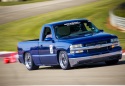


The way I see it, it all depends on what you are tring to build. If building an all out drag truck for pretty much all track use, a high hp motor would work well since the use of a high stall converter would make up for the lack of low end torque. Coming down the spectrum a bit, you have the daily driver, occasional tow rig, sport truck that is tring to get the best et possible for track days but still maintain the usability of a truck. I feel in this case better midrange torque would be the key with a medium stall (high2xxx,low3xxx) which is what most guys here are tring to build. Pure bottom end stump pulling torque would be geared more toward an all out tow vehicle. So with that said, I think a performance truck would benifit more from a motor with excelent mid rang torque with equal to slightly less HP in the upper rpm.
Jul 19, 2005 | 10:02 AM
#4
Thread Starter
MOOBIES Moderator
iTrader: (6)
Joined: Apr 2002
Posts: 4,924
Likes: 1
From: Jacksonville, FL
I have a 3200 stall converter and 4.10 gears, and plan on running a 27-28" tall tire...so basically, the converter and gear will compensate for the loss of low end torque that I would see by running a larger cam in the 230-ish duration range? The TR 224 I have now is awesome down low and still seems to pull decent up top.
The reason I ask is that almost all of the LS1 builds I see in the 450rwhp range are only at like 380-400lb-ft of torque, and I didn't know if that should be a big concern or not. I've been contemplating going w/ a 4" crank on the next build, but can't decide if the extra $1000 could be better spent on different heads or something else.
The reason I ask is that almost all of the LS1 builds I see in the 450rwhp range are only at like 380-400lb-ft of torque, and I didn't know if that should be a big concern or not. I've been contemplating going w/ a 4" crank on the next build, but can't decide if the extra $1000 could be better spent on different heads or something else.
Jul 19, 2005 | 10:12 AM
#5
That is because hp is a product of torque and rpm. Those big cams make big power because they make the troque at a higher rpm. So it all depends on where you want to go with your truck. If you are looking for a great daily driver that gets the best et's without a huge stall, a big cam may not be the best for your build. However, if you are looking to put in a bigger stall and/or are looking for power for street racing from a roll, it may work out great. Like I said before, I think a good setup for a truck would be one that has the hp and torque numbers fairly close together slightly favoring the torque.
Jul 19, 2005 | 10:23 AM
#6
Thread Starter
MOOBIES Moderator
iTrader: (6)
Joined: Apr 2002
Posts: 4,924
Likes: 1
From: Jacksonville, FL
My truck isn't a daily driver, but it's also not a dedicated race vehicle. With that said, I would definitely give up some driveability for better ET.
If I run a forged 347, I'll be able to run AFR's. The money to upgrade to a 382 would come out of the head budget. Would the torque gains from the extra cubes outweigh going w/ AFR's on a smaller motor? From what I've seen, AFR's make good gains all through the RPM band and "under the curve," not just at peak.
If I run a forged 347, I'll be able to run AFR's. The money to upgrade to a 382 would come out of the head budget. Would the torque gains from the extra cubes outweigh going w/ AFR's on a smaller motor? From what I've seen, AFR's make good gains all through the RPM band and "under the curve," not just at peak.
Jul 19, 2005 | 11:52 AM
#7

No replacement for displacement is how the old saying goes but if a smaller engine can work more efficiently then it will live longer and produce more power. How much hp are you expecting to gain from the extra cubic inches. Me personally Im going with a different brand of heads than you that flow just as good and are cheaper and going to a alot more displacement. I would try and get an engine with a little higher tq than hp like bigkid said even though you rtruck is on the light side it could benefit from more tq IMO.
Trending Topics
Jul 19, 2005 | 01:56 PM
#8

Would the torque gains from the extra cubes outweigh going w/ AFR's on a smaller motor?
Here's a 383 w/ slightly ported heads, custom 224 cam, ls6 intake, full exhaust.

This type of torque curve would better serve a truck.
Don't stop looking at the torque curve once you have reached its peak. Watch the torque curve and the way cylinder pressure decreases past this point. Chris Straub explains it best in that you shoulud watch the torque curve only. Horsepower will do its job.
In the above dyno, you can see where cylinder pressure decreases very steadily past 4800rpm. This could be taken care of by a set of AFR 205s and a FAST intake. The cam profile used a large intake crutch (224/222) so, deleting the cats and/or more exhaust flow could have also helped. In this case a 224/222 grind would of served this setup perfectly if the other pieces would have been used... I think
If I was in your shoes, it would be 383/AFR 205s/small cam/fast intake... And I think torque is the key player here.
Jul 19, 2005 | 04:35 PM
#9
Even as it sits, that setup(dyno above) would be awesome in a truck!
As for tradeing the AFR's for a 4" crank... I think I would. There are lots of great porters that do well with the GM castings although the port velocity of the AFR's is something I really like. Just be sure to get a cam that compliments the heads you decide on. Although, another option is to use a 4" rotating assembly and AFRs with your current TR224 and converter. Then you would have a torque monster that would perform well at the track and on the street for just a little more than pistons/rods, new big cam, afr, new higher stall converter. IMHO.
As for tradeing the AFR's for a 4" crank... I think I would. There are lots of great porters that do well with the GM castings although the port velocity of the AFR's is something I really like. Just be sure to get a cam that compliments the heads you decide on. Although, another option is to use a 4" rotating assembly and AFRs with your current TR224 and converter. Then you would have a torque monster that would perform well at the track and on the street for just a little more than pistons/rods, new big cam, afr, new higher stall converter. IMHO.
Jul 19, 2005 | 04:53 PM
#10

for an all out drag truck hp is all that matters, the truck with the most average hp in the rpms it is racing in will win the race.
i think everyone sumed it up nicely above. nice midrange is great for a quick and fun daily driver.
i think everyone sumed it up nicely above. nice midrange is great for a quick and fun daily driver.