


Flexfuel pump swap into non Flexfuel NNBS ???
 Oct 11, 2012 | 10:32 AM
#11
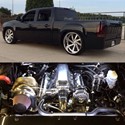


One of the first booths I will be visiting will be Squash Performance's when I get to SEMA on tuesday. I will make sure to post what ever info they give me that night when I get back to the room. Fuel and the flex system is an issue most of you know I have been dealing with for a while now, and Im very curious to know what they have to say.
Oct 11, 2012 | 10:33 AM
#12

TECH Fanatic
Joined: Jan 2011
Posts: 1,074
Likes: 0
E85 Flex Fuel Description
E85 compatible vehicles no longer use an alcohol sensor to determine and adjust for the alcohol content of the fuel in the tank. Instead, the vehicle calculates the alcohol content of the fuel through measured adjustments.
The ethanol calculation occurs with the engine running after a refueling event has been detected via a measured change in the fuel level sender output. The virtual flex fuel sensor (V-FFS) algorithm temporarily closes the canister purge valve for a few seconds and monitors information from the closed loop fuel trim system to calculate the ethanol content. This logic executes several times until the ethanol calculation is deemed to be stable. This may take several minutes under low fuel flow conditions such as idle, or a shorter time during higher fuel flow, off-idle conditions.
Air-fuel ratios and the corresponding ethanol percentage are updated following each purge-off sequence. The fuel alcohol content percentage value can be read on a scan tool.
When an E85 compatible vehicle is built, an ECM or PCM replaced, or if the learned alcohol content has been reset with a scan tool the fuel system will need to contain ASTM gasoline with 10 percent or less ethanol content.
A minimum of 11 liters (3 gallons) must be put in the tank in order for the vehicle to recognize a re-fueling event. It is not necessary to turn the ignition OFF in order to have the re-fueling event recognized, however local safety regulations should be followed.
After the re-fueling event, the system registers the amount of fuel that was added, relative to the amount that was in the tank. Reading fuel trim and O2 sensor activity, the system determines if the fuel added was either ASTM Gasoline or ASTM E85. Based on that determination, the system adjusts to the expected alcohol mix in the fuel tank, and then the fuel trim and O2 sensor activity fine tunes the adjustments. The system must remain in closed loop in order for this adjustment to occur. Numerous short trips after switching from gasoline to E85, or E85 to gasoline, can result in driveability symptoms due to the inability of the system to adjust for fuel composition by not attaining closed loop operation.
E85 compatible vehicles no longer use an alcohol sensor to determine and adjust for the alcohol content of the fuel in the tank. Instead, the vehicle calculates the alcohol content of the fuel through measured adjustments.
The ethanol calculation occurs with the engine running after a refueling event has been detected via a measured change in the fuel level sender output. The virtual flex fuel sensor (V-FFS) algorithm temporarily closes the canister purge valve for a few seconds and monitors information from the closed loop fuel trim system to calculate the ethanol content. This logic executes several times until the ethanol calculation is deemed to be stable. This may take several minutes under low fuel flow conditions such as idle, or a shorter time during higher fuel flow, off-idle conditions.
Air-fuel ratios and the corresponding ethanol percentage are updated following each purge-off sequence. The fuel alcohol content percentage value can be read on a scan tool.
When an E85 compatible vehicle is built, an ECM or PCM replaced, or if the learned alcohol content has been reset with a scan tool the fuel system will need to contain ASTM gasoline with 10 percent or less ethanol content.
A minimum of 11 liters (3 gallons) must be put in the tank in order for the vehicle to recognize a re-fueling event. It is not necessary to turn the ignition OFF in order to have the re-fueling event recognized, however local safety regulations should be followed.
After the re-fueling event, the system registers the amount of fuel that was added, relative to the amount that was in the tank. Reading fuel trim and O2 sensor activity, the system determines if the fuel added was either ASTM Gasoline or ASTM E85. Based on that determination, the system adjusts to the expected alcohol mix in the fuel tank, and then the fuel trim and O2 sensor activity fine tunes the adjustments. The system must remain in closed loop in order for this adjustment to occur. Numerous short trips after switching from gasoline to E85, or E85 to gasoline, can result in driveability symptoms due to the inability of the system to adjust for fuel composition by not attaining closed loop operation.
Oct 29, 2012 | 08:23 AM
#13

Teching In
Joined: Apr 2010
Posts: 16
Likes: 0
I did a flex fuel conversion to increases the fuel line pressure on sc cars which looses fuel pressure it worked fine on both cars a 2008 hummer h2 and a 2007 Cadillac escalade but it's not a plug and play application it needs some research and trial and error and an hp tunners
Oct 29, 2012 | 10:04 AM
#14

I was going to try this, but I lost my job so trying to keep up with bills definitely comes before truck upgrades.
My thoughts are that if your NNBS has the FPCM, which most do, that a flex fuel pump would be a drop in. I don't see GM spending extra dough to make them different. When parts are universal, cost comes down, GM saves more money.
I still reference this thread from Smokeshow, always another option. Mainly post #20 of that thread. He used dual NON-flex pumps and said his fuel pressure never dropped.
https://www.performancetrucks.net/fo...e-dyno-487723/
Also, as mentioned earlier in the thread Squash should be coming out with something soon. With my current financial situation, I'm in no hurry at all.
My thoughts are that if your NNBS has the FPCM, which most do, that a flex fuel pump would be a drop in. I don't see GM spending extra dough to make them different. When parts are universal, cost comes down, GM saves more money.
I still reference this thread from Smokeshow, always another option. Mainly post #20 of that thread. He used dual NON-flex pumps and said his fuel pressure never dropped.
https://www.performancetrucks.net/fo...e-dyno-487723/
Also, as mentioned earlier in the thread Squash should be coming out with something soon. With my current financial situation, I'm in no hurry at all.
Oct 29, 2012 | 10:11 AM
#15
Also, as far as buying it and trying to make it work, I saw these pumps on car-part all the time, sometimes as low as $100, most of the time between $125-$150. If you have the cash, buy it, try it, if it works that's great, if not I'm sure you could unload it for what you paid quickly on craigslist or ebay.
Dec 29, 2012 | 01:26 PM
#16

TECH Resident
Joined: Nov 2006
Posts: 881
Likes: 1
From: San Antonio
I did a flex fuel conversion to increases the fuel line pressure on sc cars which looses fuel pressure it worked fine on both cars a 2008 hummer h2 and a 2007 Cadillac escalade but it's not a plug and play application it needs some research and trial and error and an hp tunners
 Mar 7, 2013 | 10:07 PM
#19

Iv sent a email to Squash Performance about the Billet 2007-2012 Silverado/Sierra 1500HP dual pump system - $0.00
[FS-10036]
I did not get a response but I just sent a 2nd email. I have a flex pump and thats not good enoph for a 6.2l at 8psi. I drop to 50psi from 58psi at wot
[FS-10036]
I did not get a response but I just sent a 2nd email. I have a flex pump and thats not good enoph for a 6.2l at 8psi. I drop to 50psi from 58psi at wot
Mar 7, 2013 | 10:21 PM
#20
Unfortunately I think the squash pumps won't be out for awhile. If a flex pump swaps into my non flex pump, but still isn't enough fuel, I'll run one of the pumps as a secondary on a hobbs switch like smokeshow did a long time ago when he had a GMT900.