


Catch Can Math Are they really required
 Jul 1, 2020 | 02:32 AM
#11

Thread Starter
Teching In
Joined: Jun 2020
Posts: 23
Likes: 2

1. How much of that “2 to 3 ounces” was oil? How much was water?
2. At what volume should we be concerned? Three ounces after 500 miles seems excessive and could be an indication of a bigger issue in the engine.
3. Where is your catch can located?
4. Two port or three port catch can?
Jul 1, 2020 | 02:40 AM
#12
Thread Starter
Teching In
Joined: Jun 2020
Posts: 23
Likes: 2
I've been wanting a catch can but never got around installing one. Run the truck pretty hard (not abused) since I built the engine two years ago. Haven't noticed any abnormal oil consumption. I was almost certain when pulling the heads the piston tops would be relatively clean with my driving style. Nope... had a nice layer of carbon on the pistons which is probably normal using the factory PCV system. Think I'm going with the Moroso catch can as it has the bracket that's made to fit on the GEN 3/4 alternator bracket.
I had not heard that.
Jul 1, 2020 | 06:13 AM
#13

Staging Lane
Joined: Mar 2020
Posts: 73
Likes: 20
From: Bossier City, Louisiana
Hello,
I'm with AllenK4 and have never understood the catch can attraction. If you are worried about detonation / knock, that is why we have knock sensors and knock reduction built into the operating system within the powertrain control module.
I don't like catch cans for the same reason that I don't have an electric dog polisher. Its just not necessary.
Rick
I'm with AllenK4 and have never understood the catch can attraction. If you are worried about detonation / knock, that is why we have knock sensors and knock reduction built into the operating system within the powertrain control module.
I don't like catch cans for the same reason that I don't have an electric dog polisher. Its just not necessary.
Rick
 Jul 1, 2020 | 07:47 AM
#15
TECH Junkie


Joined: Jun 2014
Posts: 3,149
Likes: 791
From: At the dump with a clutch
I tried the boosted thing without a can and had a 1 way valve installed between the intake and pcv because I have the badly designed valve covers and had a ton of oil in the factory intake. First time I hit boost the valve was such a restriction that oil dib stick blew out and shot oil all over the headers smoking and making me think I blew my stock SBE. Since then I've had a can I see considerably more than 3-5oz but its 98% water and I attribute it to the humid climate.


 Jul 1, 2020 | 12:44 PM
#17

100% Redneck
Joined: Mar 2005
Posts: 2,098
Likes: 1,344
From: MAGA COUNTRY
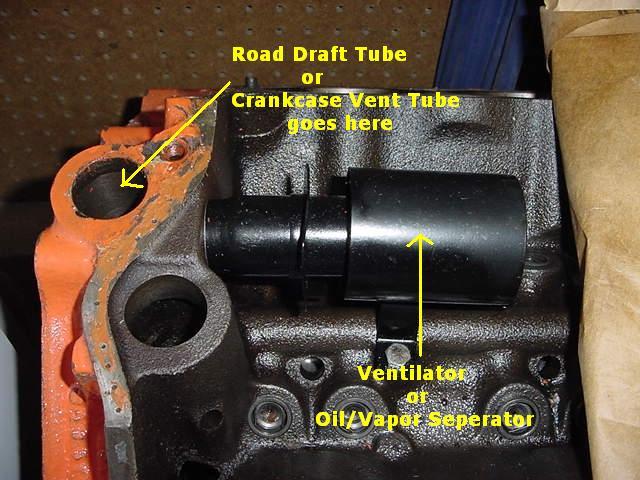
A lot of 50's & early 60's cars had a blow by tube that simply dumped the blowby underneath the vehicle onto the street. At every stop light or intersection there was a huge oily & greasy spot where cars would stop waiting for the light. Talk about no traction at stoplights! Most here are to young to have seen those huge oil slicks on the pavement and would have a conniption just seeing that... I'm sure some are triggered just reading about it.

Piston with carbon buildup from my two year LQ9 build with only 11,000 miles (no catch can).

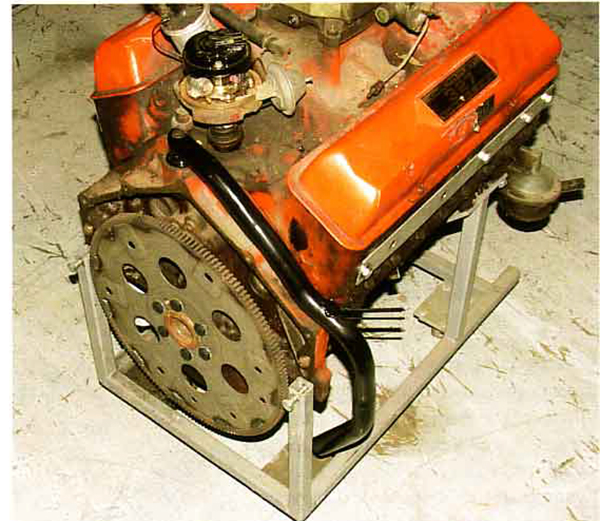
The old blowby dump tube on a early 60's small block. If it had a reservoir it would make an efficient catch can lol. You can see where the tube oozed oil on the floor just sitting there!
 Jul 1, 2020 | 06:55 PM
#18

- If you are getting 20 mpg, you will burn 150 gallons of fuel over 3,000 miles. That’s 19,200 ounces
- If you are getting 3oz of fluid in the catch can during those 3,000 miles...that bad stuff accounts for .000156% of the total fluid going thru the system
- A large portion of the fluid in the catch can is condensation and introduced into the intake would have no effect
How would 1 1/2 oz of oil, introduced as vapor, over 3,000 miles have any measurable effect on octane?
Really, just trying to justify NOT adding a Catch Can. I hate all of the extra hoses under the hood.
My point is that you can't assume that the oil escapes the crankcase at a constant miles/ounce ratio, and have to consider only WOT high rpm usage.
And as stated above, this mainly applies to forced induction with wide ring gaps. Have you ever noticed on monster trucks, because you can see under the engine, how much fumes blast out of their downward pointing crankcase vents? It looks like a small rocket engine.
Jul 1, 2020 | 07:22 PM
#19

TECH Addict
Joined: Nov 2015
Posts: 2,094
Likes: 556
From: Coastal NC
Jul 2, 2020 | 01:13 AM
#20
Thread Starter
Teching In
Joined: Jun 2020
Posts: 23
Likes: 2
Your equation is faulty as far as the effect on octane from oil mist goes. You would have to know how much oil comes out of the crankcase during operation where the octane rating of your gas is needed. So how much of that oil gets into the intake at WOT, 3800 to 5500 rpm pulls, and how much time do you spend driving in these conditions. Maybe most of that 1-1/2 oz comes at full throttle?
My point is that you can't assume that the oil escapes the crankcase at a constant miles/ounce ratio, and have to consider only WOT high rpm usage.
And as stated above, this mainly applies to forced induction with wide ring gaps. Have you ever noticed on monster trucks, because you can see under the engine, how much fumes blast out of their downward pointing crankcase vents? It looks like a small rocket engine.
My point is that you can't assume that the oil escapes the crankcase at a constant miles/ounce ratio, and have to consider only WOT high rpm usage.
And as stated above, this mainly applies to forced induction with wide ring gaps. Have you ever noticed on monster trucks, because you can see under the engine, how much fumes blast out of their downward pointing crankcase vents? It looks like a small rocket engine.
I’m not sure it matters when the vapor is introduced into the intake, but I am willing to listen and learn more.
Most of what I have read indicates that blow by increases with Boost and RPM.
EDIT. CORRECTION. THE PCV IN MOST VEHICLES DOES NOT VENTILATE THE CRANK AT HIGHER RPM’S. IT F7NTIONS ONLY AT IDLE AND WHILE CRUISING AT LOW RPM’s
EDITED ABOVE.....I have read; PCV systems do not return much to the intake system at lower RPM.
So, I would s that most of what ends up in the catch can gets there during Spirited Driving.
Ring gap is an interesting question. I bet most of the guys reading the forum are running lower boost levels, with stock ring gaps.
I am still unclear how to determine the change in octane that could be caused by these amounts of crankcase vapor being introduced into the intake system.
Is there agreement that introducing these small amounts of the non-oil liquid component back into the intake has little effect?
Last edited by allenk4; Jul 8, 2020 at 01:59 PM.