


Dyno Results seem right? LQ4 / S475
 Jul 8, 2015 | 02:44 PM
#21


I'm looking at those gears as the culprit for the slow spool... And by slow, I don't mean time on the x axis and boost on the y axis. I mean RPM on the x axis and boost on the y axis. Its gonna feel like it spools quick on the street because of the mechanical advantage of those gears, but realistically it will be slower (vs RPM, as you noticed on the dyno) since the turbo RPM has to increase even more because the engine air demand is increasing more rapidly and the turbo lags behind it and falls into lower isentropic efficiency ranges. This is that mysterious 'load' term that people throw around from time to time. Neglecting the smaller components, this 'load' is a function of cylinder fill, RPM, and time. There's a reason when stock48 launches a turbo vehicle he flashes the converter and then lets RPM drop before actually leaving. Gotta get the turbo speed up before the engine needs it, effectively cutting back on that time delay 
Cams that big on a setup as conservative as yours is (ie not designed around that camshaft) are nothing more than an EGR without the valving and hardware. Good for keeping emissions lower while in boost...but that's about it. The pressure differential between back pressure and manifold pressure versus the time and quantity of overlap in degrees of duration between IVO and EVC and lift of the valves will determine your effective clean air charge into the cylinder as a result of how much gets displaced by exhaust gas. When valves are in overlap with turbo-induced back pressure, flow can actually reverse direction and head back out through the intake port for a short time. Then when the exhaust valve closes, that flow reverses again and packs all of that exhaust flowing into the intake right back into the cylinder. Good for reducing emission of hydrocarbons and oxides of nitrogen...bad for making power. This could be exacerbated by your hot pipe design...
It would take some detailed pictures to make a determination, but if your drawing is correct, placement of that 2.5" pipe into the inlet flange of the turbo could be creating unnecessary back pressure. It would also explain why trying to lean out the mixture made power drop off, as 10.8 AFR in theory should never make more power than a leaner mixture on straight gasoline. Cool down your exhaust gases with extra fuel and you're suddenly able to force more exhaust gas through an undersized orifice, since the ability of an orifice to allow fluid flow below its absolute flow limit is dependent on the density of the fluid.
My prescription... Swap the cam out for something smaller. Fix that hot pipe choke point. As far as gears go, that's really up to you. Lower numerical ratio on the gears would make the turbo happier, but you'd obviously sacrifice some acceleration out on the road. With that engine compression and 93 octane, aside from cam choice and hot pipe design, I see no reason you shouldn't be able to max out the turbo and see 800hp+.
Cams that big on a setup as conservative as yours is (ie not designed around that camshaft) are nothing more than an EGR without the valving and hardware. Good for keeping emissions lower while in boost...but that's about it. The pressure differential between back pressure and manifold pressure versus the time and quantity of overlap in degrees of duration between IVO and EVC and lift of the valves will determine your effective clean air charge into the cylinder as a result of how much gets displaced by exhaust gas. When valves are in overlap with turbo-induced back pressure, flow can actually reverse direction and head back out through the intake port for a short time. Then when the exhaust valve closes, that flow reverses again and packs all of that exhaust flowing into the intake right back into the cylinder. Good for reducing emission of hydrocarbons and oxides of nitrogen...bad for making power. This could be exacerbated by your hot pipe design...
It would take some detailed pictures to make a determination, but if your drawing is correct, placement of that 2.5" pipe into the inlet flange of the turbo could be creating unnecessary back pressure. It would also explain why trying to lean out the mixture made power drop off, as 10.8 AFR in theory should never make more power than a leaner mixture on straight gasoline. Cool down your exhaust gases with extra fuel and you're suddenly able to force more exhaust gas through an undersized orifice, since the ability of an orifice to allow fluid flow below its absolute flow limit is dependent on the density of the fluid.
My prescription... Swap the cam out for something smaller. Fix that hot pipe choke point. As far as gears go, that's really up to you. Lower numerical ratio on the gears would make the turbo happier, but you'd obviously sacrifice some acceleration out on the road. With that engine compression and 93 octane, aside from cam choice and hot pipe design, I see no reason you shouldn't be able to max out the turbo and see 800hp+.
Jul 8, 2015 | 03:36 PM
#22


Joined: Jan 2006
Posts: 16,282
Likes: 438
From: Huntsville, AL
I'm looking at those gears as the culprit for the slow spool... And by slow, I don't mean time on the x axis and boost on the y axis. I mean RPM on the x axis and boost on the y axis. Its gonna feel like it spools quick on the street because of the mechanical advantage of those gears, but realistically it will be slower (vs RPM, as you noticed on the dyno) since the turbo RPM has to increase even more because the engine air demand is increasing more rapidly and the turbo lags behind it and falls into lower isentropic efficiency ranges. This is that mysterious 'load' term that people throw around from time to time. Neglecting the smaller components, this 'load' is a function of cylinder fill, RPM, and time. There's a reason when stock48 launches a turbo vehicle he flashes the converter and then lets RPM drop before actually leaving. Gotta get the turbo speed up before the engine needs it, effectively cutting back on that time delay
Originally Posted by Smokeshow
Cams that big on a setup as conservative as yours is (ie not designed around that camshaft) are nothing more than an EGR without the valving and hardware. Good for keeping emissions lower while in boost...but that's about it. The pressure differential between back pressure and manifold pressure versus the time and quantity of overlap in degrees of duration between IVO and EVC and lift of the valves will determine your effective clean air charge into the cylinder as a result of how much gets displaced by exhaust gas. When valves are in overlap with turbo-induced back pressure, flow can actually reverse direction and head back out through the intake port for a short time. Then when the exhaust valve closes, that flow reverses again and packs all of that exhaust flowing into the intake right back into the cylinder. Good for reducing emission of hydrocarbons and oxides of nitrogen...bad for making power. This could be exacerbated by your hot pipe design...
OP, if you have the cam card, feel free to post it up to see where IVO and EVC are located.
Originally Posted by Smokeshow
It would take some detailed pictures to make a determination, but if your drawing is correct, placement of that 2.5" pipe into the inlet flange of the turbo could be creating unnecessary back pressure. It would also explain why trying to lean out the mixture made power drop off, as 10.8 AFR in theory should never make more power than a leaner mixture on straight gasoline. Cool down your exhaust gases with extra fuel and you're suddenly able to force more exhaust gas through an undersized orifice, since the ability of an orifice to allow fluid flow below its absolute flow limit is dependent on the density of the fluid.
Originally Posted by Smokeshow
My prescription... Swap the cam out for something smaller. Fix that hot pipe choke point. As far as gears go, that's really up to you. Lower numerical ratio on the gears would make the turbo happier, but you'd obviously sacrifice some acceleration out on the road. With that engine compression and 93 octane, aside from cam choice and hot pipe design, I see no reason you shouldn't be able to max out the turbo and see 800hp+.
 Jul 8, 2015 | 04:06 PM
#23
You are right that you generally want the turbo to "outrun" the engine, however I dont think its a good idea for him to swap to numerically lower gears in this case. Going to a lower gear will certainly get into boost more quickly (time and rpm wise), but I would bet the vehicle as a whole would be slower if you ran it on a track. The old "area under the curve" scenario. Its most poeples goal's to go fast, not necessarily make boost quickly.
Yes, this is all true, but just looking at the cam specs he has about half a degree of overlap, not nearly enough to cause the detrimental amount of reversion you describe. If it was some donkey dick NA cam with 30 degrees of overlap then yea I agree there is something to be gained, but I dont think so in his case.
OP, if you have the cam card, feel free to post it up to see where IVO and EVC are located.
OP, if you have the cam card, feel free to post it up to see where IVO and EVC are located.

I can't see his drawing, but I think I know what he is describing and I heavily doubt that is his issue. The flow restriction of a 2.5" pipe versus the actual turbine wheel and housing is not significant. A 2.5" pipe with 1500 degree air under probably 30psi will flow a **** ton more than that turbine wheel before choking. Mach 1 at 1500 degrees is around 2100ft/s, and is not a significant function of pressure (although it does rise slightly with pressure). Air moving 2100ft/s from a 2.5" pipe is roughly 4300CFM.
Cards are on the table, place your bets! Lets see what you got, Richie Rich
 Jul 8, 2015 | 04:09 PM
#24
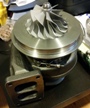
Based on the video, that big T6 spools much better than I would have expected. This may be a case of the OP with unrealistic expectations.
Also, 14 psi on that turbo is hardly working it. At 20 psi, it will be significantly more responsive.
Also, 14 psi on that turbo is hardly working it. At 20 psi, it will be significantly more responsive.
Jul 8, 2015 | 04:45 PM
#25

Thread Starter
Launching!
Joined: Feb 2014
Posts: 248
Likes: 0
From: Wisconsin
Here is cam card, Cam was speced by geoff at EPS for turbo build. Geoff told me cam would be full boogie at 3400 RPM (i would guess that means boost) and he made that cam as he said it would carry up 6800 and shift at 7,000 RPM. My old cam I had he said would run out of breath to soon. was like a 222/230 112 +2
I was wrong on number that i can see now on cam card.

Justin at BB is original tuner of this project and even he said that the gears shouldn't be a issue and 800HP should be in reach at 1bar.
Tuner said that it starts making boost at 4,000 RPM and full boost at 5500.
The gears in the truck were installed before I ever even thought of turbo build. He was saying that going to a smaller AR like .96 will allow for boost sooner. I do plan on going to 35" tires one day and thats why gear is at 5.13
Im very great full for all the help you guys are offering here. If i have to change cam, turbo ect I will do it. It would be nice to get that power band bigger.
Last edited by NuckenFuts; Jul 8, 2015 at 04:58 PM.
Jul 8, 2015 | 11:24 PM
#28
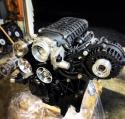
now, if he was on e85 with an LSx block and a top dollar crank with I beams... You get the idea.
Jul 8, 2015 | 11:33 PM
#29
Look at anything TJ @ BEI has done. He's been preaching about good quality fuel for years with many setups to back it up, yet people wanna continue to run wawa ****. So be it.
Jul 9, 2015 | 12:10 AM
#30
Right on good quality fuel. I assume you mean e85 or otherwise, right?
And I have no doubt the stock stronger rods will handle 1000 HP. But Id rather not subject them to that on the reg...
And I have no doubt the stock stronger rods will handle 1000 HP. But Id rather not subject them to that on the reg...