


Did I put my IAT sensor in the wrong spot?
 Jun 11, 2013 | 07:25 PM
#1


 Did I put my IAT sensor in the wrong spot?
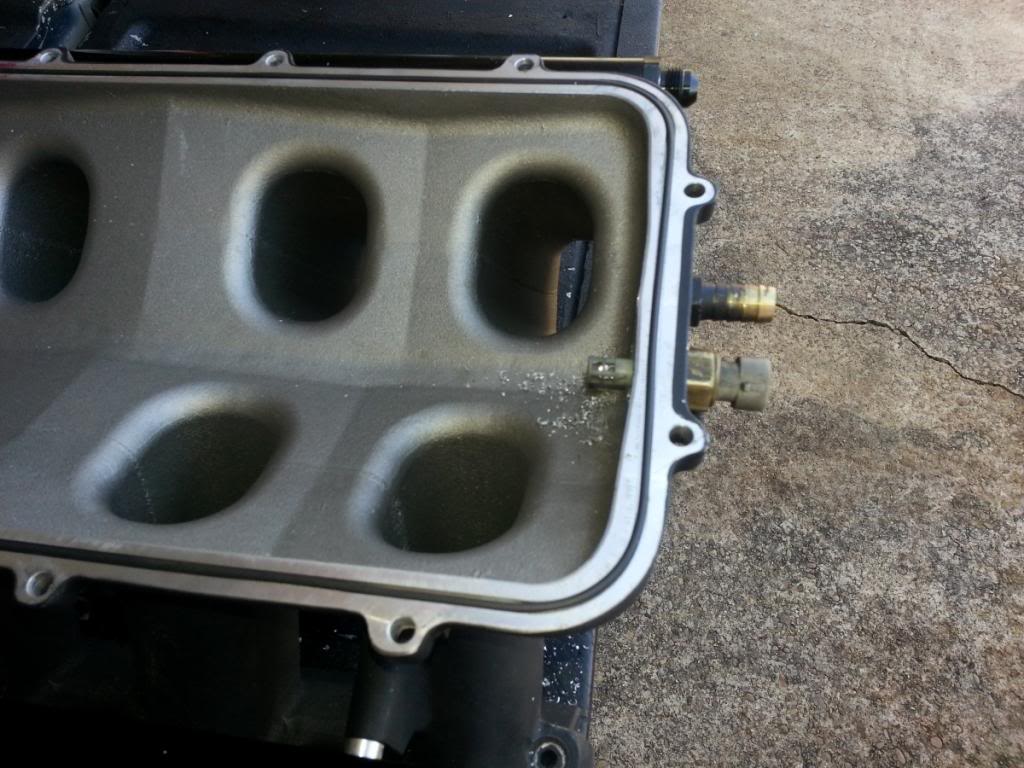
I have a Pro Flo XT intake, and I decided to put the sensor in the back of the intake right near the firewall. I decided to put it there because I wanted it as far down stream as possible for a more accurate reading. Maybe im wrong though. I get terrible heat soak there. If I shut the truck off, my IAT's will climb to 140ish. Im not sure if it is related, but my truck is getting progressively leaner the longer I run it. I am not even adding any fuel to compensate for the temps. (I might start a thread regarding that in the tuning section)
Jun 11, 2013 | 07:30 PM
#2

Go put your hand on it after the truck is shutoff and I bet you'll understand why you see 140's, that thing gets hots. However when driving it shouldn't be that bad, air isn't just hanging out in there, it's flowing thru it.
That said, you got the sensor there, log it while driving and during pulls. Why are you worried about temps when the engine isn't running?
That said, you got the sensor there, log it while driving and during pulls. Why are you worried about temps when the engine isn't running?


 Jun 11, 2013 | 08:07 PM
#4
Im not worried when it isnt running, it just seems like it never cools back down once it gets that high. Yeah the intake gets pretty hot when it warms up. It isnt easy to change a cam sensor for a couple hours, I know that. Lol
Im glad both of you guys responded, I know you guys have put more research into this than I have.
Im glad both of you guys responded, I know you guys have put more research into this than I have.
Jun 11, 2013 | 08:10 PM
#5

That will happen anywhere in the intake. Mine is in the front of the intake where the EGR was. My IAT's barely go up at all in boost, but it's sticking out into the flow path. Not sure if something is wrong or my intercooler works really well.
Jun 11, 2013 | 08:35 PM
#6

I'm not a fan of the IAT sensor in back of the intake. Flowing air has a boundary layer near the surface through which it is flowing. If the sensor doesn't protrude far enough into the air stream, the air can be stagnated and not give you an accurate temperature reading.
The proper way to fix this is not to move the sensor into your intake, but adjust the complex model charge temperature bias to reflect more heavily on ECT rather than IAT. Since metal intakes are more prone to heat soak, just adjust the bias and filter values to account for it.
The proper way to fix this is not to move the sensor into your intake, but adjust the complex model charge temperature bias to reflect more heavily on ECT rather than IAT. Since metal intakes are more prone to heat soak, just adjust the bias and filter values to account for it.
Jun 11, 2013 | 09:00 PM
#7

I'm not a fan of the IAT sensor in back of the intake. Flowing air has a boundary layer near the surface through which it is flowing. If the sensor doesn't protrude far enough into the air stream, the air can be stagnated and not give you an accurate temperature reading.
The proper way to fix this is not to move the sensor into your intake, but adjust the complex model charge temperature bias to reflect more heavily on ECT rather than IAT. Since metal intakes are more prone to heat soak, just adjust the bias and filter values to account for it.
The proper way to fix this is not to move the sensor into your intake, but adjust the complex model charge temperature bias to reflect more heavily on ECT rather than IAT. Since metal intakes are more prone to heat soak, just adjust the bias and filter values to account for it.

Trending Topics
Jun 11, 2013 | 09:16 PM
#8

Joined: Jan 2006
Posts: 16,282
Likes: 438
From: Huntsville, AL
Boundary layers are on the order of milimeters given the geometry in the intake and flow rate, so I wouldnt really worry about that. I think you should go the other way with the model charge...you should shift it more towards the IAT sensor the closer the sensor gets to the intake valve. There is less distance and time for the heads to heat up the air if its measured a foot away versus say 3 or 4 feet.
Lets try and define what "heat soak" really is....metal intakes heat up quicker than plastic ones, but they dont reach a steady state higher temperature. Air is also in the intake for so short of a time at high-throttle, you could make the argument that heat transfer from the intake to the air is insignificant.
Lets try and define what "heat soak" really is....metal intakes heat up quicker than plastic ones, but they dont reach a steady state higher temperature. Air is also in the intake for so short of a time at high-throttle, you could make the argument that heat transfer from the intake to the air is insignificant.
 Jun 11, 2013 | 09:30 PM
#9
Damn that sensor is clooooose to the bottom of the intake. 1/3 of the sensor is hugging hot aluminum. In that situation, I would much rather prefer it in the intake stream before the throttle body.
